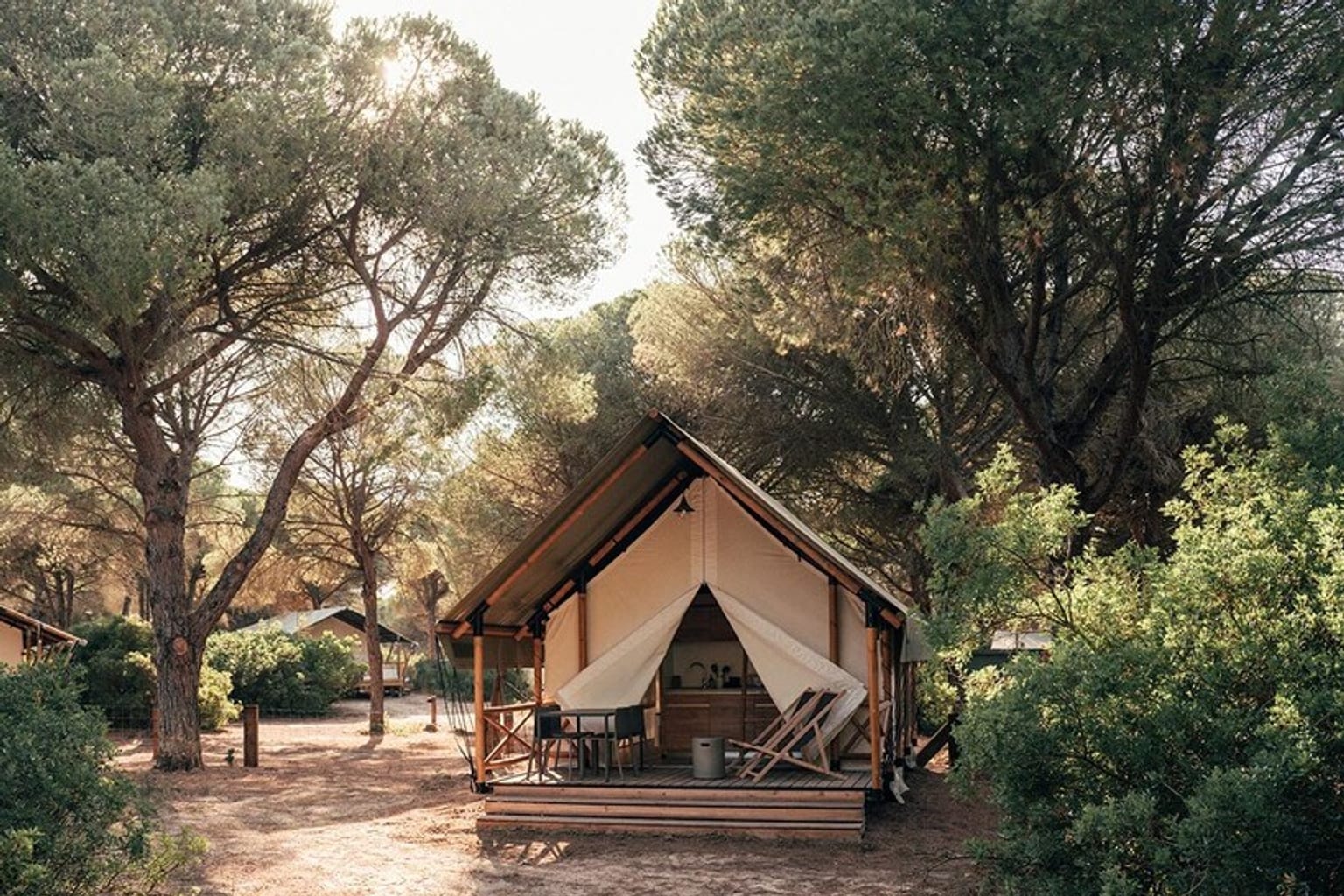
Trenchs Studio has completed a low-impact glamping retreat in a southern Spanish pine forest. The project uses lightweight structures and natural materials to blend into the surrounding Cadiz landscape.
What happened
The new hospitality site operates under the wecamp brand. It sits inside a traditional Spanish dehesa in the province of Cadiz.
Architects at Trenchs Studio designed the camp to thread carefully among the existing pine trees. They prioritized lightweight construction methods to minimize ground disturbance.
The design relies heavily on natural materials to build out the guest areas. The entire visual palette pulls directly from the surrounding environment.
Designers used pale woods, earth tones, and soft greens throughout the property. These specific color choices help the structures visually recede into the dense forest.
Guest accommodations take the form of elevated tents and modular cabins. The architectural layout actively avoids cutting down mature trees.
Walkways and communal spaces float slightly above the forest floor. This approach prevents heavy machinery from destroying the natural undergrowth during the building phase.
Why it matters
Tourism development often damages fragile coastal and forest ecosystems in southern Spain. Heavy concrete foundations permanently alter soil composition and natural water drainage.
This project demonstrates a lighter, more flexible approach to hospitality architecture. By using modular and lightweight elements, software teams can protect the local terrain.
The retreat caters to a growing commercial demand for nature-based travel. It allows visitors to experience the Cadiz pine forests without the massive footprint of a traditional resort hotel.
It also reflects a broader industry shift toward regenerative design architecture. Modern outdoor sites are increasingly expected to adapt to the land, rather than flattening the topography.
Preserving the dehesa ecosystem maintains the region’s biodiversity. This specific type of landscape is historically significant and ecologically sensitive.
The catch
Glamping still brings concentrated human activity into previously quiet ecosystems. Even lightweight camps require access roads, plumbing networks, and power infrastructure.
Hundreds of rotating guests generate noise, light pollution, and daily waste. These environmental factors inevitably affect local wildlife, regardless of the camp’s muted architectural color palette.
Furthermore, natural materials like untreated pale wood often degrade faster than concrete or steel. The site may require frequent repairs, chemical treatments, and material replacements over time.
Low-impact remains a relative term in commercial hospitality. The site still functions as a high-traffic business operating inside a natural reserve.
What to verify
The exact square footage of the disturbed land remains unclear from the initial design reports. Independent environmental assessments of the camp’s daily operations are not publicly listed.
Reviewers should check how the site handles local wastewater and electricity generation. It is also worth verifying the sourcing and sustainability certifications of the pale woods used in construction.
The long-term survival rate of the immediate pine trees needs close monitoring. Soil compaction from constant foot traffic could still harm shallow root systems over the next decade.
Local authorities must ensure the camp adheres to strict seasonal fire safety regulations. Pine forests in southern Spain face severe wildfire risks during the dry summer months.
Source trail
The design details, material specifications, and project images were originally published by Designboom. The architecture firm Trenchs Studio manages the overarching spatial design for this specific wecamp location in Spain.
Additional context on the shift toward regenerative design architecture was noted in recent industry reviews. The project highlights an ongoing debate about balancing tourism growth with ecological preservation.