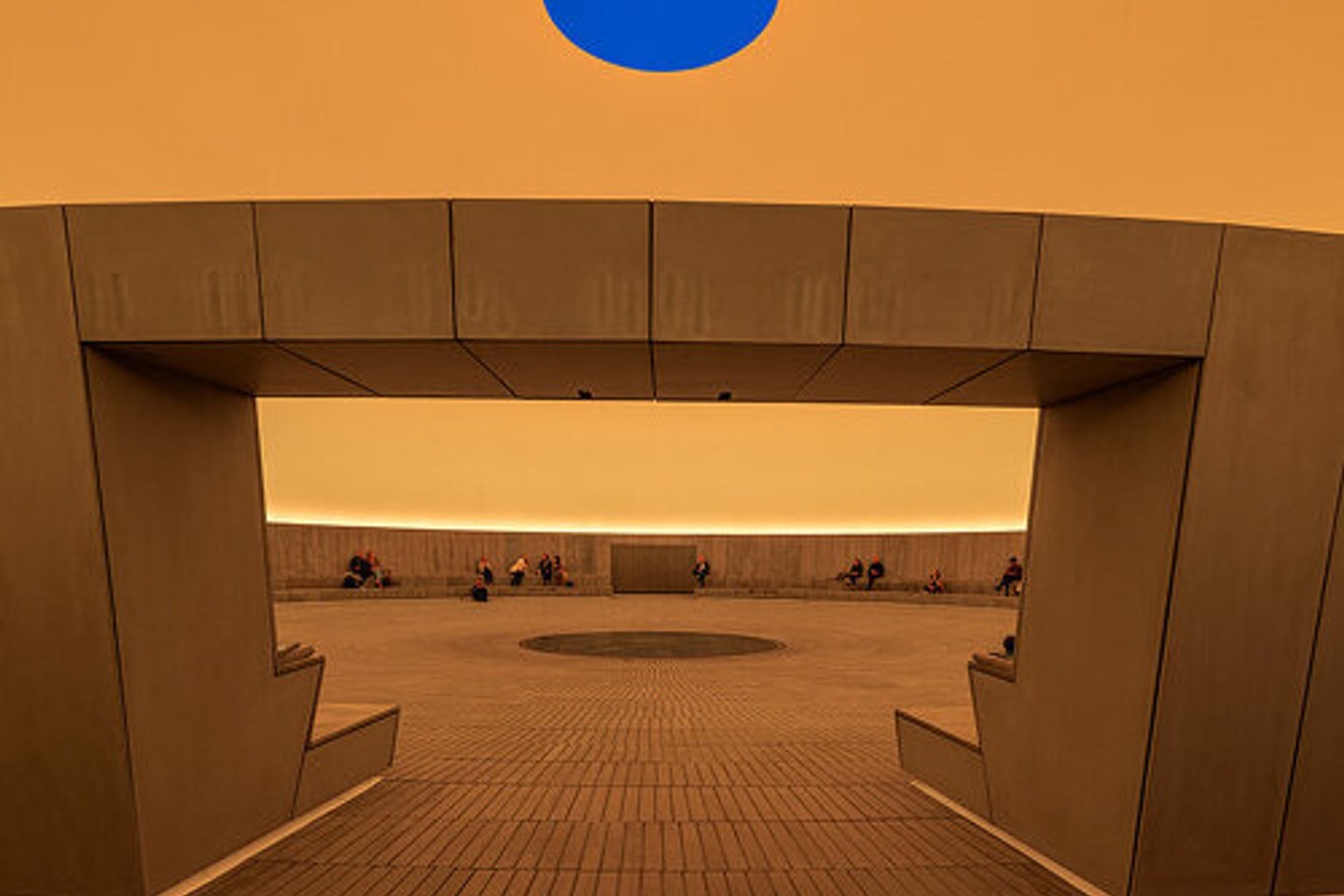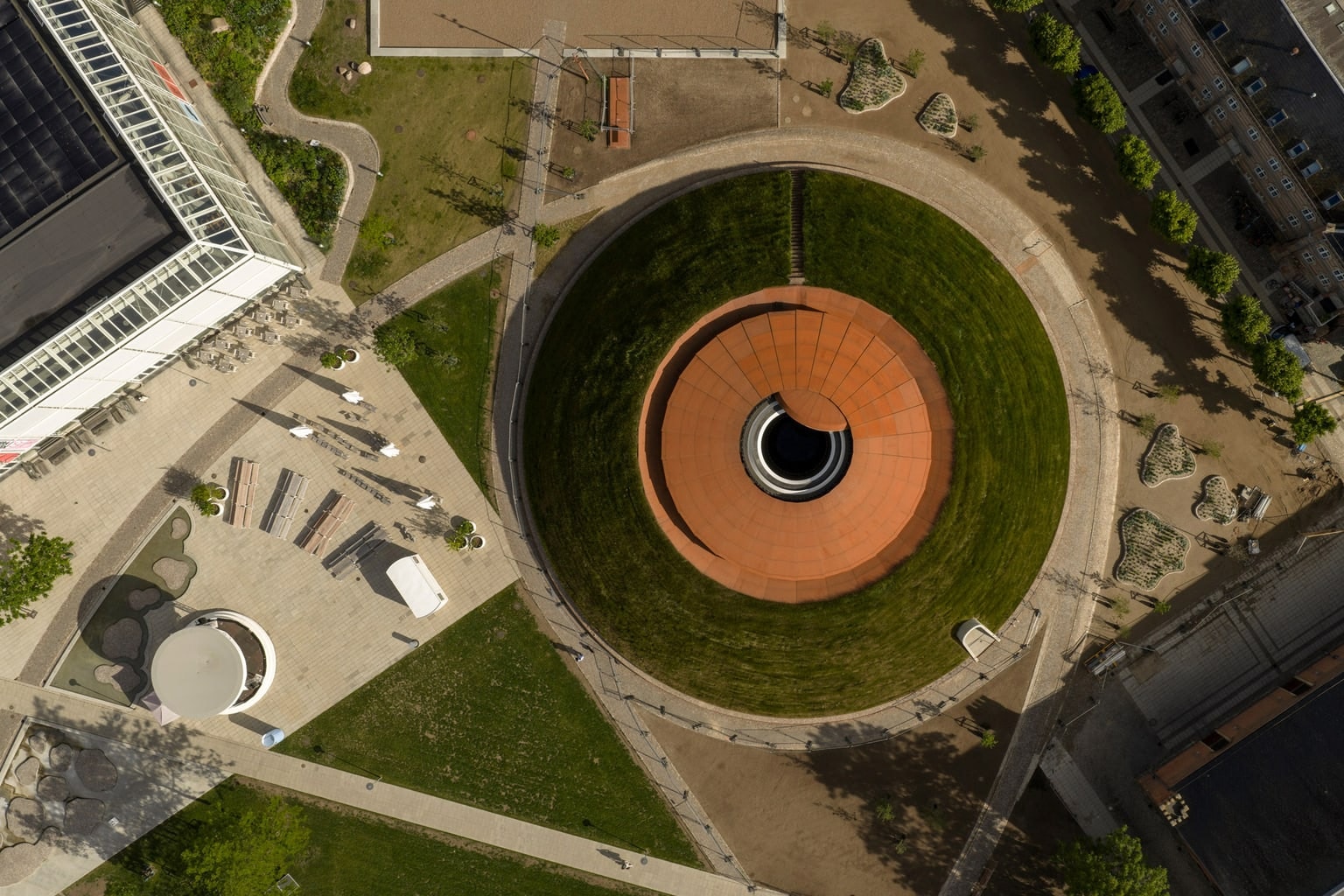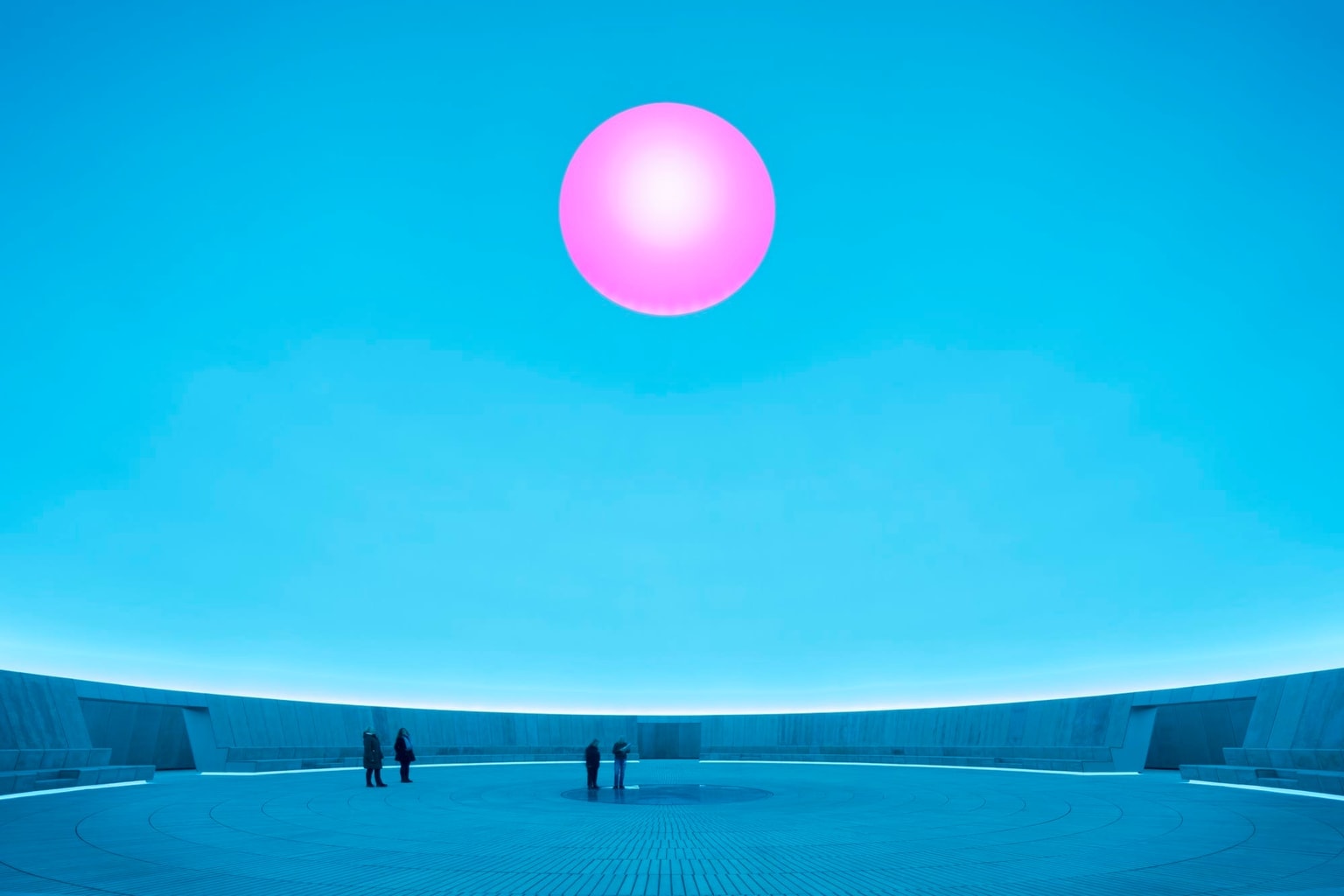
Perceptual artist James Turrell has opened his 100th Skyscape installation. Titled “As Seen Below,” the massive domed structure is now permanently on view at the ARoS museum in Aarhus, Denmark.
What happened
Turrell reached a major career milestone this month. He completed the 100th iteration of his iconic Skyscape series.
The new artwork sits inside a site-specific architectural installation. It features a simple but massive construction.
The structure spans more than 50 feet in height. It stretches 130 feet across in width.
At the center of the dome sits an oculus. This circular opening points directly toward the sky.
Most of the time, the oculus remains open. It frames the natural, unfiltered sky above Aarhus.
However, the installation also features programmed visual changes. The museum describes these events as “color shifts.”
During these shifts, the oculus physically seals shut. The installation then casts brilliant, artificial colors around the enclosed space.
The piece is a permanent addition to the ARoS museum collection. Visitors must reserve tickets to enter the structure.
Turrell has spent decades building these specific viewing spaces. His Skyscapes currently exist in 26 different countries around the world.
Why it matters
Turrell is a recognized pioneer in perceptual art. His work relies heavily on human vision and light.
Reaching 100 distinct Skyscapes highlights the enduring appeal of his concept. The core idea has remained remarkably consistent over the years.
He uses light and empty space as actual physical materials. The installations force visitors to observe subtle changes in the atmosphere.
By placing “As Seen Below” at ARoS, the museum secures a major piece of contemporary art history.
The scale of this specific dome is unusually large. A 130-foot width makes it a massive architectural undertaking.
It blends outdoor natural elements with controlled indoor environments. This creates a highly specific sensory experience.
The artwork transforms a simple view of the sky into a framed picture. The changing light alters how the brain perceives the color of the sky itself.
The catch
Experiencing a Skyscape properly requires time and patience. The visual effects depend heavily on the local weather.
The time of day also drastically changes the appearance of the artwork. An overcast Danish sky yields a very different experience than a bright afternoon.
The artificial color shifts alter the original concept of an open viewing portal. When the oculus seals, the artwork becomes a closed light room.
This removes the connection to the natural environment outside.
Visitors must reserve tickets in advance through the museum website. Access to the dome is strictly regulated to prevent overcrowding.
Large crowds easily ruin the quiet nature of the space. The intended effect requires a calm, contemplative environment.
What to verify
The exact schedule for the artificial color shifts remains unclear. The museum has not published a public timetable for when the oculus seals.
It is unknown how the mechanical seal operates during harsh winter weather in Denmark. Snow and ice could potentially affect the opening mechanism.
The exact construction costs for the 50-foot dome have not been disclosed by the museum.
Art historians may debate whether the sealed color shifts deviate too far from Turrell’s original open-sky concept.
Source trail
The details of the installation come from a recent report by This Is Colossal.
The arts publication highlighted the career milestone and shared official photographs of the new space.
Photographer Florian Holzherr provided the official images for ARoS.
Further ticketing information is available directly through the museum’s official channels.