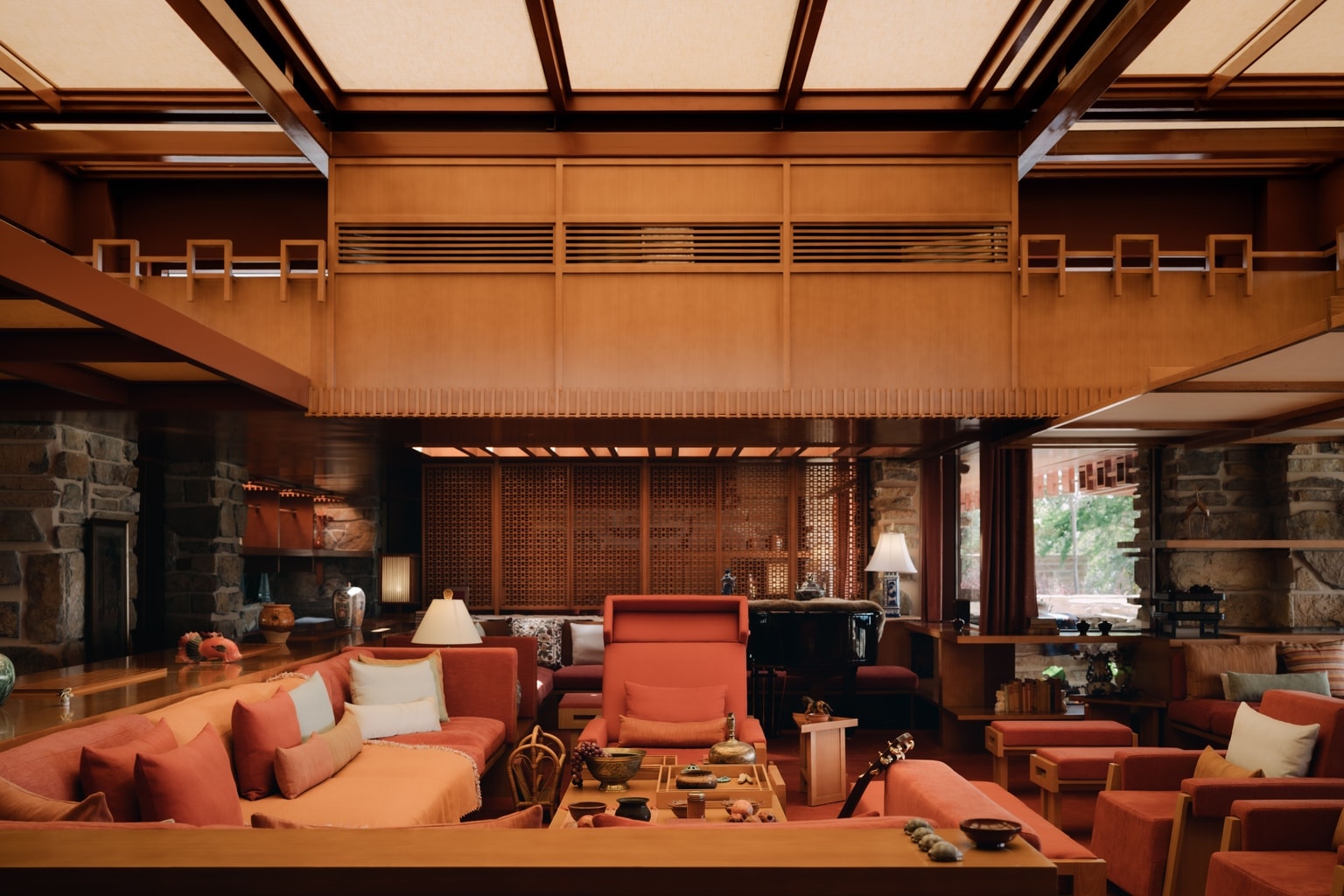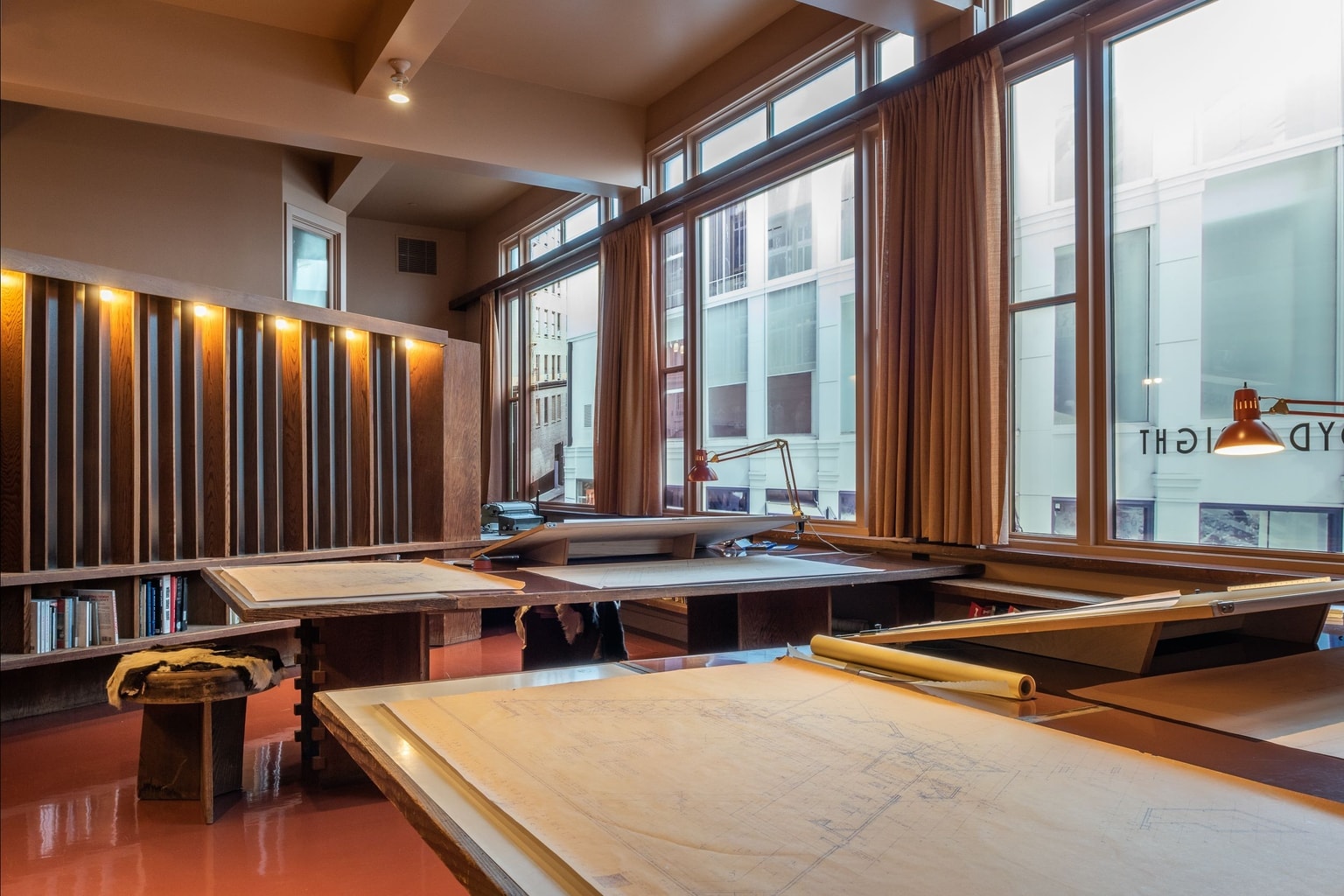
Frank Lloyd Wright’s former San Francisco field office is open to the public again. After decades in storage, the 1951 redwood workspace has been rebuilt inside a new 3,000-square-foot immersive education center at the Hagen History Center in Erie, Pennsylvania.
What happened
Wright opened the office in 1951 with his associate Aaron Green. He needed a California workspace to handle local commissions.
It was his only formal office outside of his own residences, such as Taliesin and his Chicago home.
Wright designed the interior using redwood plywood. The structure is largely self-supporting.
It sits on its original floor plate without needing structural support from the surrounding room walls.
Following Wright’s death in 1959, Green kept using the space until 1988. Green recognized the historical value of the office and dismantled it board by board.
He tagged, cataloged, and crated every piece. The disassembled room then spent 30 years tucked away in a Buffalo, New York, storage facility.
It made one brief public appearance behind glass at a Pittsburgh museum in the 1990s. The Hagen History Center finally acquired the boxes in 2020.
The team finished rebuilding the physical room in 2021. Now, the museum has opened the space with new interactive exhibits.
The design firm Zebradog created the new experiential elements. The firm worked with the museum to build an entire story around the historic artifact.
Why it matters
The exhibit allows visitors to walk directly inside the historic workspace. Past displays kept the public separated from the architecture by glass barriers.
The new installation uses sound and video to recreate a 1950s workday. Mark Schmitz, founder of Zebradog, wanted the room to feel like the draftsmen had just stepped out for lunch.
A custom soundscape plays the noise of San Francisco traffic, ringing phones, and murmuring voices. A video screen features an actor playing Wright working at his desk.
The museum filmed the actor using equipment common in the 1950s to maintain an authentic look. Proximity sensors detect approaching visitors.
This prompts the actor to look up and speak as if addressing a new client. He discusses how he designs structures to exist in harmony with nature.
The room also highlights Wright’s famous architectural tricks. It demonstrates his concept of compression and release.
Instead of directing the eye toward nature outside, the high ceilings and windows point toward the drafting tables. The design forces visitors to focus on where the action happens.
The catch
The exhibit focuses heavily on humanizing Wright rather than purely analyzing his architecture. Museum officials designed the story around the man to make his complex design theories easier to grasp.
The experience relies heavily on modern museum technology. Proximity sensors, video screens, and recorded soundscapes drive the entire exhibit.
These theatrical additions create a highly curated narrative. They might frustrate architectural purists looking for a quiet, unembellished space dedicated solely to historic preservation.
What to verify
Check the Hagen History Center’s official schedule for daily viewing hours and ticket availability.
Confirm if the interactive designing activities are open to all age groups.
Look up the specific dates for any guided tours focusing on the new Zebradog exhibition elements.
Source trail
Details on the restoration and reopening come from Architectural Digest.
Information about the original 1951 construction and Aaron Green’s preservation efforts is sourced from the magazine’s interviews with museum leadership.