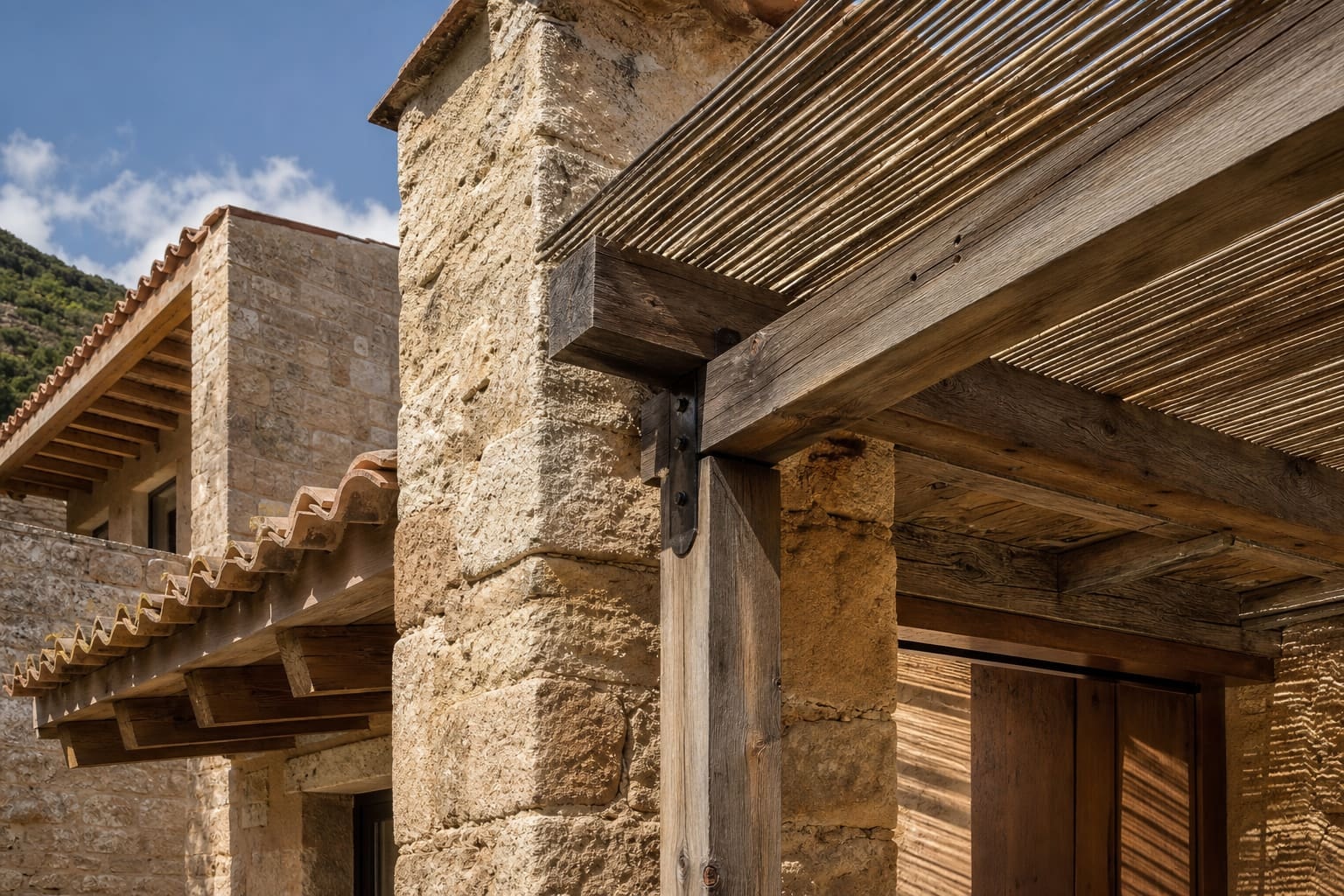
Architecture studio Anna and Eugeni Bach has updated a holiday home in the medieval Spanish village of Fonolleres. The project adds a network of porches, pergolas, and terraces to shift daily living outside while preserving the original historic structure.
What happened
The design team expanded an existing residential structure in Catalonia. They named the completed project Fonolleres House.
The renovation focuses on easing the transition between the enclosed interior rooms and the surrounding landscape.
To achieve this, the architects built new outdoor living zones. These additions include shaded pergolas and covered porches.
The new structures attach directly to the older building.
The design creates a series of stepped terraces. These platforms adapt to the natural slope of the village terrain.
The new framework allows residents to cook, eat, and relax outdoors. It maximizes the usability of the property during hot Mediterranean summers.
The extension effectively expands the living area without requiring massive changes to the primary indoor floor plan.
Why it matters
Updating buildings in medieval villages requires balancing modern comfort with historic preservation. Older Spanish homes often feature small windows and thick stone walls.
These traditional designs keep interiors cool. However, they also block natural light and restrict views of the countryside.
By adding external pergolas, Anna and Eugeni Bach bypassed the need to gut the historic shell. The new porches act as a functional climate buffer.
They provide deep shade and cross-ventilation without altering the original medieval masonry. This approach offers a practical blueprint for modernizing rural European properties.
It preserves the historic streetscape. At the same time, it upgrades the property for contemporary holiday use.
The lightweight modern additions contrast cleanly with the heavy ancient stone.
The catch
Outdoor living spaces remain highly dependent on the local climate. While pergolas offer essential shade in July, they do not provide warmth during the winter.
These open-air additions may sit unused for several months of the year. Furthermore, building new structures in a medieval village involves complex logistics.
Construction crews must navigate narrow, historic streets. Bringing heavy materials and modern equipment into an ancient village center often drives up project costs and extends timelines.
What to verify
Check the local planning regulations in Fonolleres regarding modern additions to historic facades. Look for the specific materials the architects used to construct the new pergolas and terraces.
Confirm the total square footage added to the original property footprint. Review the project timeline to understand the specific construction challenges of building on the sloping site.
Source trail
Design magazine Dezeen detailed the project in their coverage of the Fonolleres House extension. For more context on regional building traditions, review the history of architecture in Catalonia.
What to verify
Check the exact names, dates, prices, locations, documents, expert records, or retailer terms that support the claim. The source trail starts with more Dezeen coverage so later updates can be checked against the original wording.
That keeps the confirmed facts separate from early interpretation. Less dramatic, usually more accurate.