A new retrospective in Porto explores the sweeping signature style of Pritzker-winning architect Frank Gehry. The exhibition gathers models of his most famous buildings to trace his long career.
What happened
The Serralves Foundation in Porto is hosting a major exhibition dedicated to Frank Gehry. The show focuses on the architect’s distinct, sweeping design language.
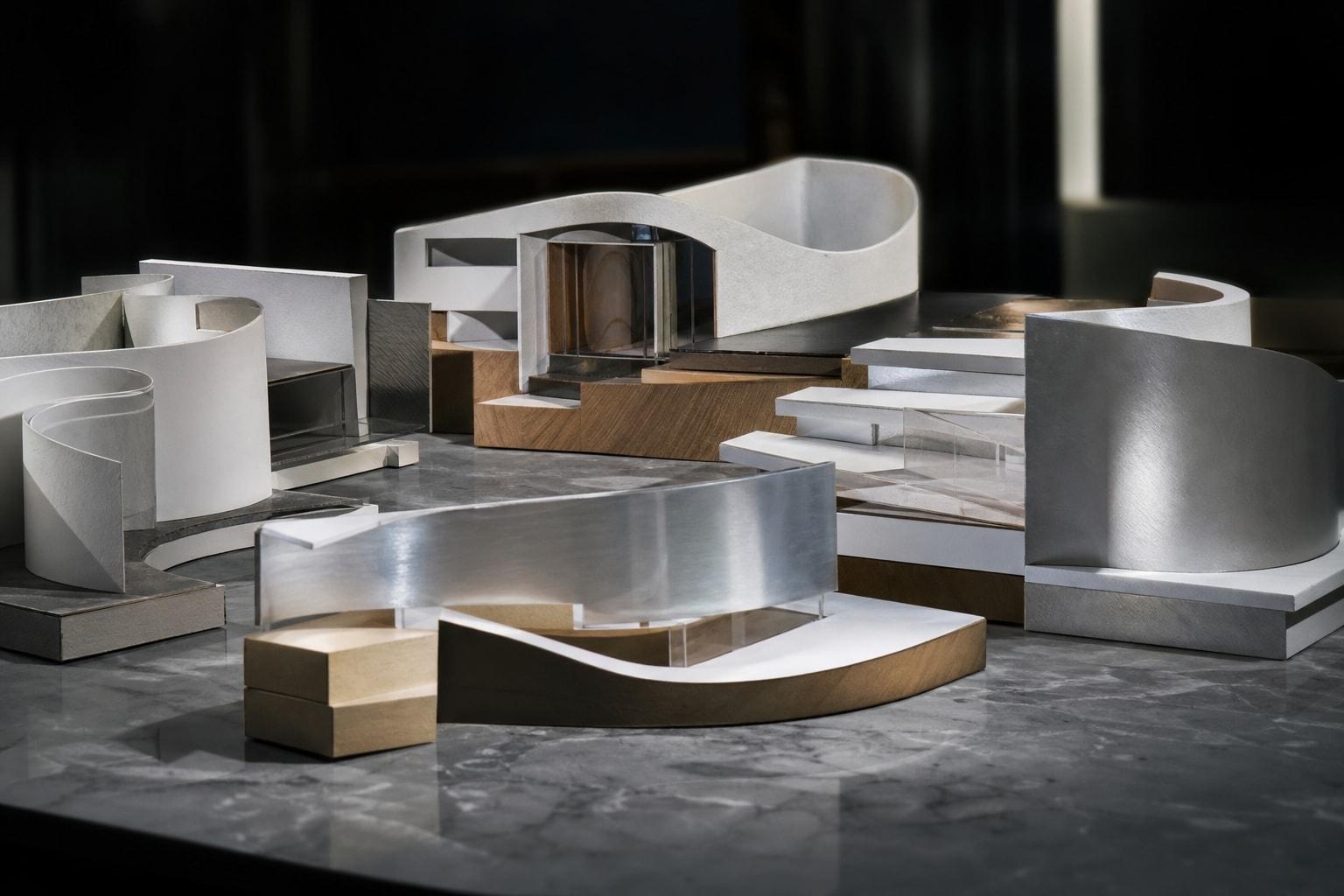
The venue itself is a prominent cultural institution known for hosting major contemporary art and architecture events. Visitors can view detailed architectural models of his most iconic global projects here.
These scale models show how his complex ideas take physical form. The exhibition highlights the Guggenheim Bilbao in Spain.
This museum is famous for its rolling titanium curves.
The show also features the Vitra Design Museum in Germany. This was one of Gehry’s first major projects in Europe.
It stands out for its striking white geometric shapes.
Models of LUMA Arles are also on display. This newer arts center in southern France features a twisting tower covered in reflective steel panels.
Together, these models represent the key milestones of Gehry’s career. The exhibition maps out how his style evolved over several decades.
Gehry won the Pritzker Architecture Prize in 1989. This award cemented his status as a leading figure in contemporary design.
Why it matters
Frank Gehry fundamentally changed modern architecture. He moved away from rigid boxes and embraced fluid, sculptural forms.
His buildings often become major cultural landmarks. The Guggenheim Bilbao proved that daring architecture could transform a city’s economy.
This phenomenon became known as the Bilbao Effect.
This retrospective puts his career-defining projects in a single room. It gives people a rare chance to study the structural mechanics behind his art.
Gehry’s work relies on advanced engineering and specialized computer software. The models show the precise planning required to build his chaotic-looking structures.
Gehry pioneered the use of everyday materials in unexpected ways before moving on to aerospace-grade metals. Seeing the Vitra Design Museum next to LUMA Arles highlights his creative journey.
It shows his shift from sharp deconstructivism to sweeping metallic waves.
The catch
Scale models only tell part of the architectural story. A miniature version of a building cannot replicate the physical experience of walking through it.
Gehry’s buildings are famous for how they interact with their environments. The way sunlight hits the massive titanium panels in Bilbao is impossible to scale down.
Buildings are designed to exist within a specific landscape or city grid. A model on a pedestal strips away that surrounding urban context.
The exhibition relies heavily on these static representations. Observers miss the sheer scale and spatial drama of the actual finished structures.
Furthermore, the focus on his biggest hits might overshadow his smaller, earlier works. Gehry spent years designing private homes and furniture before winning the Pritzker Prize.
What to verify
Check the official Serralves Foundation schedule for the exhibition’s exact opening and closing dates.
Confirm if the show includes early conceptual sketches alongside the physical models.
Look into whether the exhibition features any of his recent unbuilt projects or urban planning proposals.
Verify the specific scale of the models on display. Some architectural exhibitions use massive room-sized models, while others rely on smaller tabletop versions.
Source trail
The details of this retrospective come from a recent report by Designboom.
The exhibition takes place at the Serralves Foundation in Porto, Portugal.