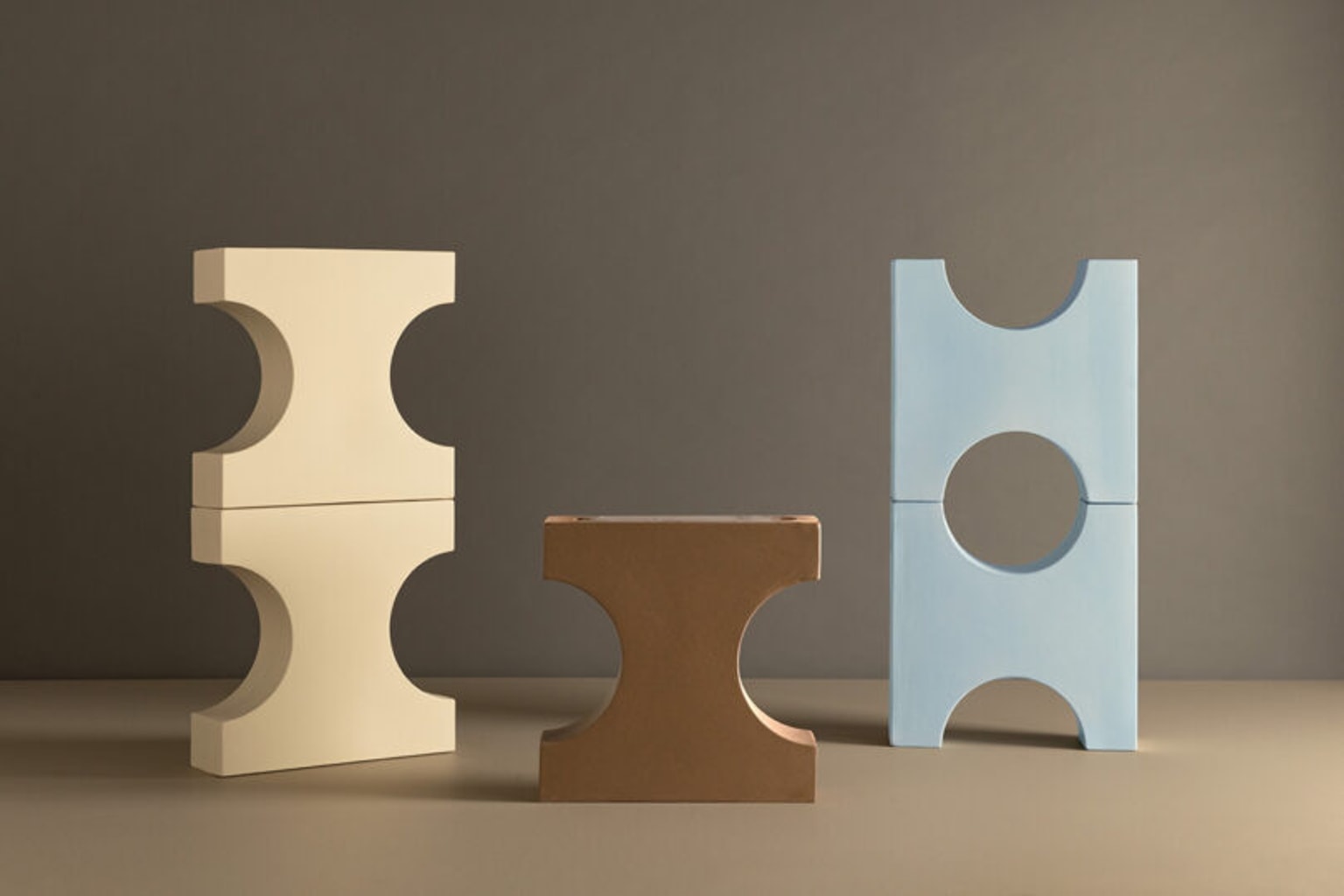
Note Design Studio has introduced Emisferi, a new ceramic building block. The project takes flat tiles from Italian brand Mutina and shapes them into three-dimensional bricks.
The collection recently debuted at the 3daysofdesign festival in Copenhagen.
Why it matters
The design industry constantly seeks new ways to use traditional materials. Flat ceramic tiles usually stay firmly attached to bathroom floors and kitchen walls.
They rarely exist as freestanding objects.
Note Design Studio decided to pull these surfaces into the center of the room. They turned a basic two-dimensional cladding material into a standalone structural object.
The project gained immediate traction at the Copenhagen design event. Furniture makers and interior architects are looking closely at the modular potential.
Sharing this development highlights how simple material shifts can create entirely new product categories. It shows the evolution of interior surfaces into active furniture.
The catch
Emisferi translates to “hemispheres” in Italian. The blocks feature rounded, geometric profiles.
They are designed to stack, align, and interlock seamlessly.
Mutina is historically known for manufacturing high-end, flat ceramic surfaces. This collaboration pushes the Italian company into physical volume and spatial design.
The bricks function like heavy-duty building blocks for adults. Designers can arrange them into custom furniture pieces, such as tables or benches.
They also work for larger architectural applications. A builder could construct a solid partition wall or a custom reception desk entirely from these modules.
The concept relies entirely on strict geometric precision. If the ceramic blocks warp even slightly during firing, they will not stack correctly.
Achieving this level of uniformity in fired clay requires significant technical control. Ceramics naturally shrink and shift inside a hot kiln.
Note Design Studio had to account for these unpredictable material quirks. The resulting blocks offer a tactile, cold, and heavy alternative to standard wood or plastic modular systems.
While visually striking, ceramic furniture presents obvious weight and mobility challenges. A solid block table will not be easy to slide across a dining room floor.
The blocks also introduce a distinct acoustic presence. Hard ceramic surfaces reflect sound, which could change the noise profile of a room filled with this furniture.
What to verify
The exact weight and load-bearing capacity of the Emisferi blocks remain unclear. Structural limits will define how architects actually use them in commercial spaces.
Production scale is another major open question. Mutina has not confirmed if these will remain niche custom orders or enter standard mass production.
Pricing details are now missing from the initial product announcements. High-end Italian ceramics rarely come cheap.
Solid 3D blocks require significantly more raw material than flat tiles.
Durability in high-traffic areas needs real-world testing. Chipped edges on a ceramic table would instantly ruin the strict geometric aesthetic.
Source trail
The initial report on the Emisferi debut comes from Design Milk.
The publication covered the product launch directly from the exhibition floor.
Additional context on the festival itself can be found through the official 3daysofdesign platform. The annual Copenhagen event highlights emerging Scandinavian and global design trends.
Note Design Studio and Mutina have successfully turned flat ceramic tiles into modular, 3D building blocks. The Emisferi collection offers a fresh, heavy-duty approach to custom furniture and interior architecture.
The concept proves that traditional materials still hide untapped structural possibilities. Designers are no longer restricted to using ceramics just as a surface skin.
Still, the practical realities of building heavy ceramic furniture will test the limits of the design. The market will soon decide if the aesthetic appeal outweighs the sheer physical weight.