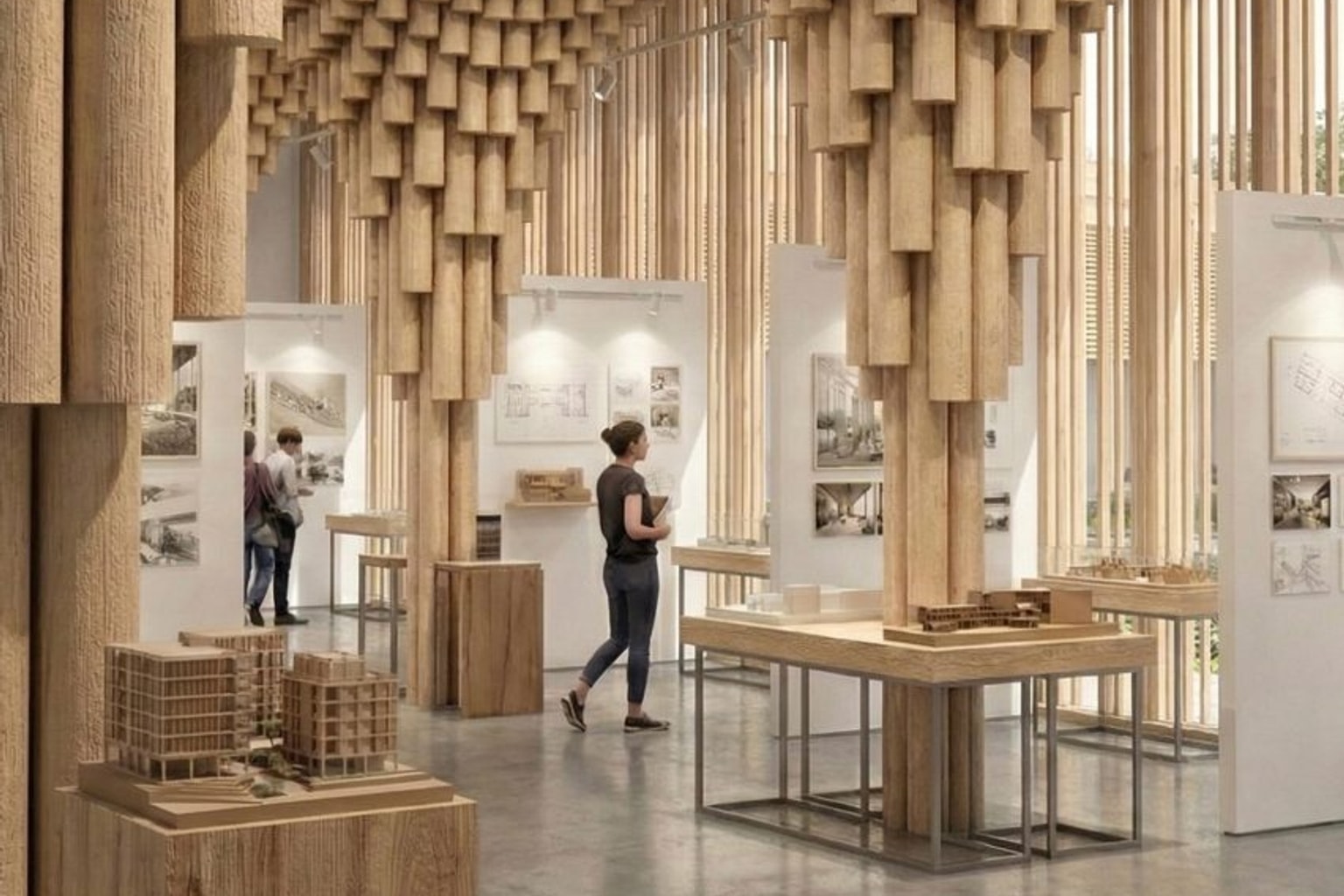
Architecture is increasingly tasked with solving complex social and emotional challenges, moving far beyond mere shelter or aesthetic statement. This shift is vividly illustrated in a recent showcase of student work from California Baptist University, highlighted in the popular design publication Dezeen.
For design enthusiasts and community planners alike, The story matters because it provides a hopeful glimpse into how the next generation of architects plans to tackle pressing human issues like memory loss and communal trauma.
Why it matters
The featured collection, part of the “Dezeen School Shows” series, brings attention to several standout conceptual projects from the university’s architecture program. Among the most striking designs now circulating in design spheres is a sculpted wooden architecture museum deeply informed by the spatial philosophy of the late Spanish sculptor Eduardo Chillida.
Alongside this artistic endeavor, the showcase highlights highly empathetic, function-driven spaces. Notably, the presentation includes a specialized care center designed specifically for individuals living with Alzheimer’s disease, as well as a church conceptualized for communities actively recovering from hardship.
The juxtaposition of these projects is driving interest because it shows a dual focus in modern architectural education: the pursuit of high artistic form and the urgent need for therapeutic, socially conscious community infrastructure.
The catch
At the core of this showcase is a broader question about the role of the built environment in human healing and cultural preservation. People looking at these California Baptist University projects are trying to understand how abstract architectural concepts translate into tangible benefits for vulnerable populations. For instance, the Alzheimer’s care center project prompts questions about how spatial design—such as lighting, navigation paths, and sensory materials—can mitigate the confusion and anxiety associated with cognitive decline. Similarly, the concept of a church for recovering communities suggests an architectural approach rooted in psychological safety, communal gathering, and spiritual restoration.
Also, the inclusion of the Eduardo Chillida-inspired museum bridges the gap between fine art and structural engineering. Chillida was renowned for his monumental abstract works that explored the relationship between solid form and the void.
People and design students are keen to see how a student architect translates that specific sculptural tension into a functional, habitable wooden structure. It signals a desire in contemporary design to return to highly tactile, conceptually rich materials like sculpted wood, moving away from sterile glass and steel boxes.
What to verify
Because these are student projects featured in an academic showcase, several practical elements remain to be explored. Observers will want to verify the specific environmental and structural viability of the sculpted wooden museum.
Wood is a highly sustainable material, but creating complex, Chillida-esque voids and curves requires advanced timber engineering and fabrication techniques. It remains to be seen what specific joinery or mass timber technologies the student proposed to achieve these forms.
Also, for the Alzheimer’s care center, it will be important to verify how closely the architectural plans align with current neurological research. Future inquiries should look into whether the student consulted with medical professionals to ensure the spatial layout actively reduces the wandering and disorientation typical of the disease.
Finally, the next step is to check if California Baptist University plans to exhibit these physical models locally, or if any of these conceptual designs are being adapted into real-world community pilot programs.
Source trail
The primary signal for this development is the recent feature published by Dezeen, an influential architecture and design magazine. Their “School Shows” segment regularly highlights emerging talent from global institutions.
For broader context on the artistic inspiration behind the museum project, further context appears in the legacy of Eduardo Chillida through major art institutions that house his sculptural explorations of space and scale.
California Baptist University architecture students are pushing the boundaries of spatial design by proposing conceptual buildings that address both profound artistic legacies and critical social needs, from an Alzheimer’s care facility to a museum inspired by Spanish sculpture.