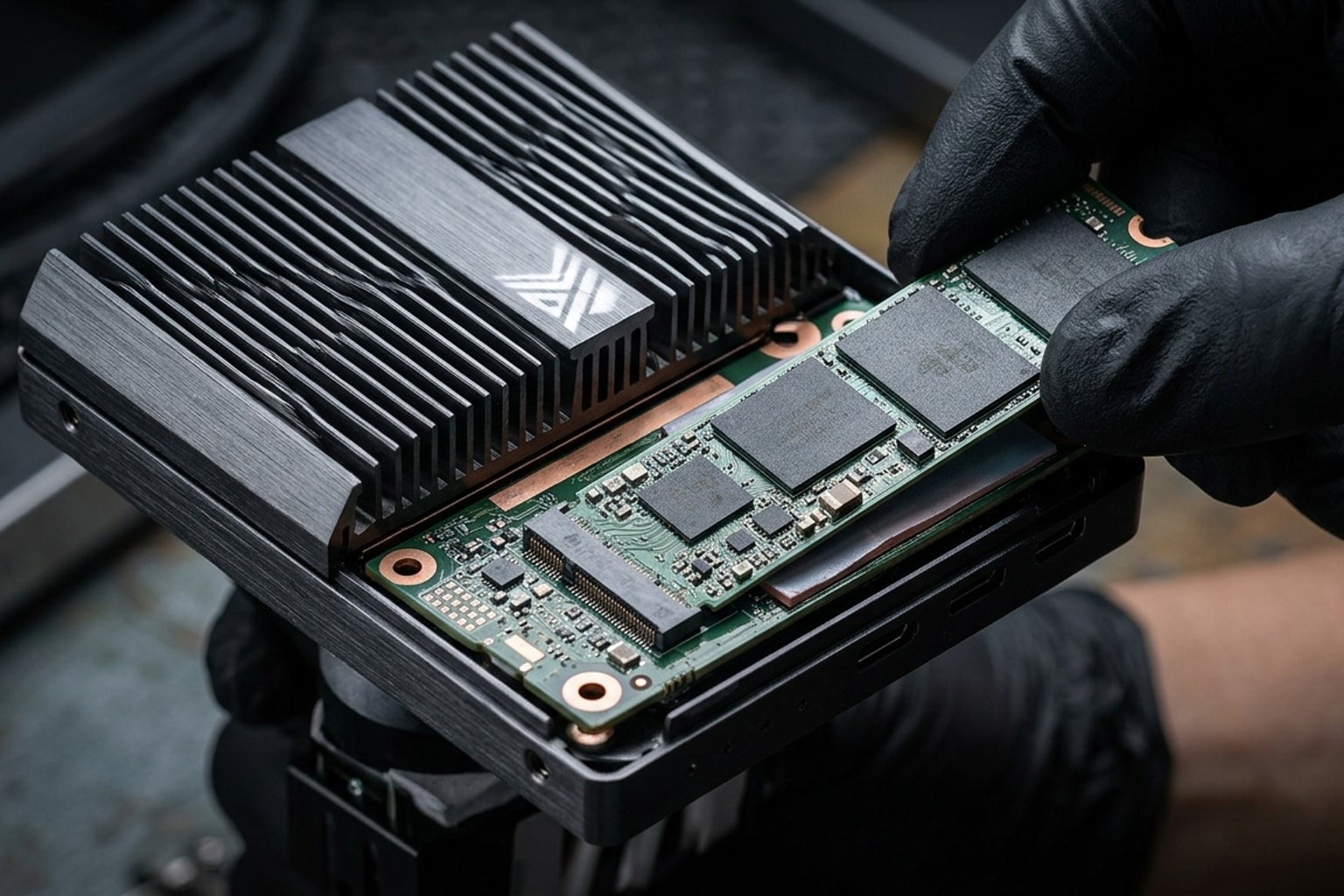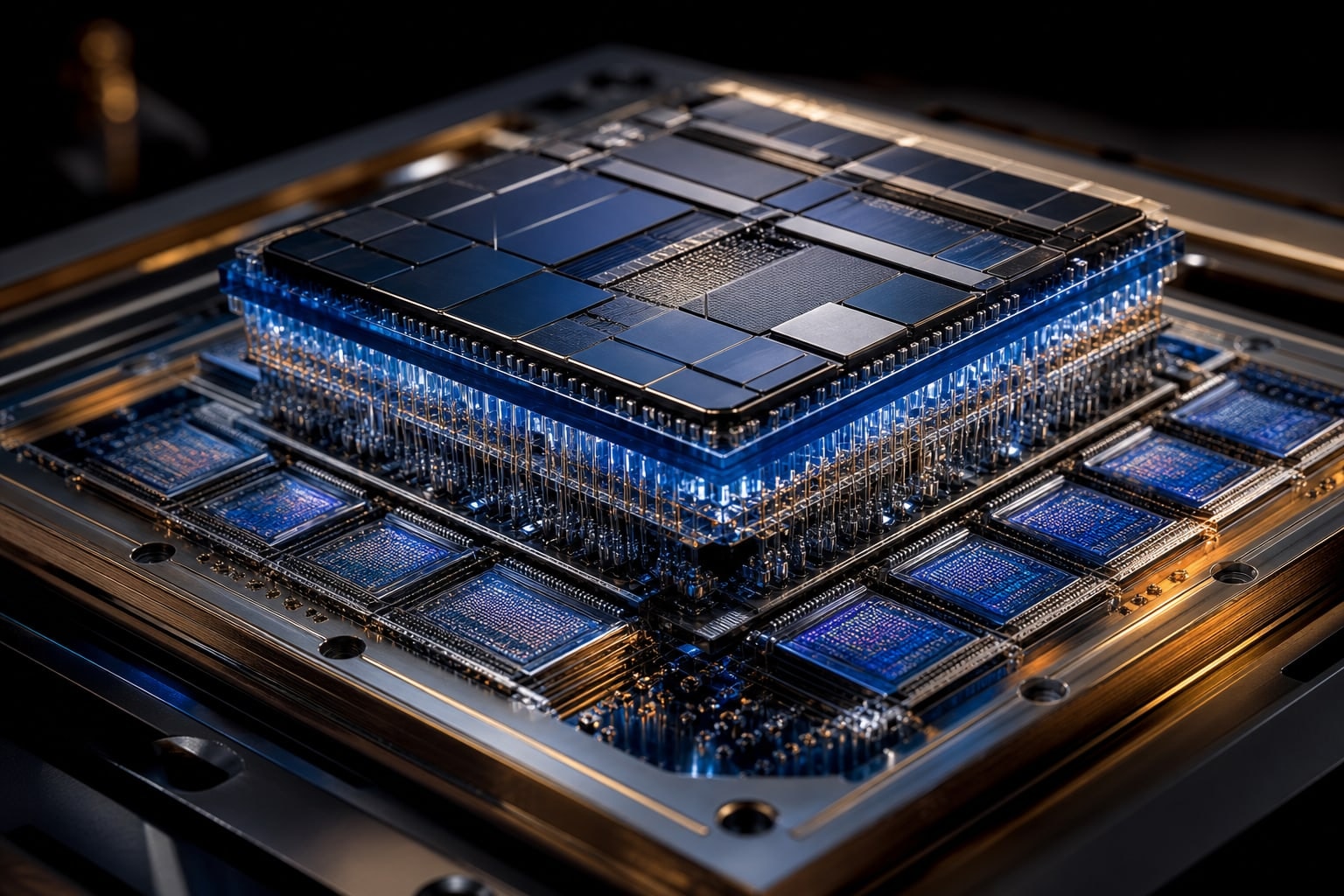
Qualcomm has introduced a new HBC near-memory architecture for artificial intelligence processing. The company claims its new AI250 and AI350 accelerators break the traditional “memory wall,” offering massive efficiency gains over existing hardware.
What happened
Qualcomm revealed its new HBC near-memory AI architecture. The announcement centers on two specific hardware accelerators: the AI250 and the AI350.
The company made aggressive performance claims about these new chips. Qualcomm states the HBC design delivers six times higher bandwidth-per-watt than standard High Bandwidth Memory (HBM).
The new architecture also offers 200 times the capacity of traditional on-chip SRAM. According to Qualcomm, this specific combination of capacity and efficiency effectively shatters the “memory wall.”
The memory wall is a well-known hardware bottleneck. It occurs when fast processors sit idle while waiting for data from slower memory modules.
By moving high-capacity memory physically closer to the processing cores, the HBC design aims to eliminate this processing delay.
Why it matters
Running artificial intelligence models requires moving massive amounts of data constantly. Current AI accelerators rely heavily on HBM to handle this dense traffic.
HBM is incredibly fast, but it consumes a significant amount of electricity. It also generates a lot of heat, requiring expensive cooling systems in server farms.
On the other end of the spectrum, on-chip SRAM is even faster and sits right next to the processor. However, SRAM takes up too much physical space on the silicon die.
This size limitation restricts how much SRAM capacity can actually fit on a single chip. Qualcomm’s HBC architecture attempts to solve both problems at once.
By offering 200 times more capacity than SRAM, the AI250 and AI350 chips can store vast amounts of data locally.
The six-fold improvement in bandwidth-per-watt over HBM means the chips run much more efficiently. Lower power consumption allows data centers to reduce their electricity bills.
It also allows server operators to pack more AI accelerators into a single rack without overheating the facility.
The catch
These impressive performance metrics come directly from Qualcomm’s own marketing materials. Independent hardware reviewers have not yet tested the AI250 or AI350 accelerators.
Vendor benchmarks almost always highlight best-case scenarios. Real-world AI workloads involve unpredictable variables, so users may not see the exact six-fold efficiency gain.
Furthermore, the AI hardware market is highly competitive. Rival chipmakers are already developing their own next-generation memory packaging solutions.
Adopting a totally new memory architecture also requires substantial software optimization. Software teams will need to update their machine learning frameworks to utilize the HBC design properly.
What to verify
Watch for independent benchmark tests of the AI250 and AI350 accelerators. Hardware analysts will need to verify the exact power draw under heavy, sustained AI workloads.
Check if major server manufacturers announce concrete plans to integrate these specific Qualcomm chips into their upcoming product lines.
Look for official pricing details. Qualcomm has not yet revealed how much the HBC architecture will cost compared to traditional HBM setups.
Monitor software support announcements. Major AI frameworks must release updates before software teams can fully utilize the new memory structure.
Source trail
This news relies on a report from Tom’s Hardware. The publication detailed Qualcomm’s claims about breaking the memory wall with its new accelerators.
For broader technical context on memory bottlenecks, Semiconductor Engineering tracks the ongoing industry challenges with SRAM scaling and HBM power consumption.