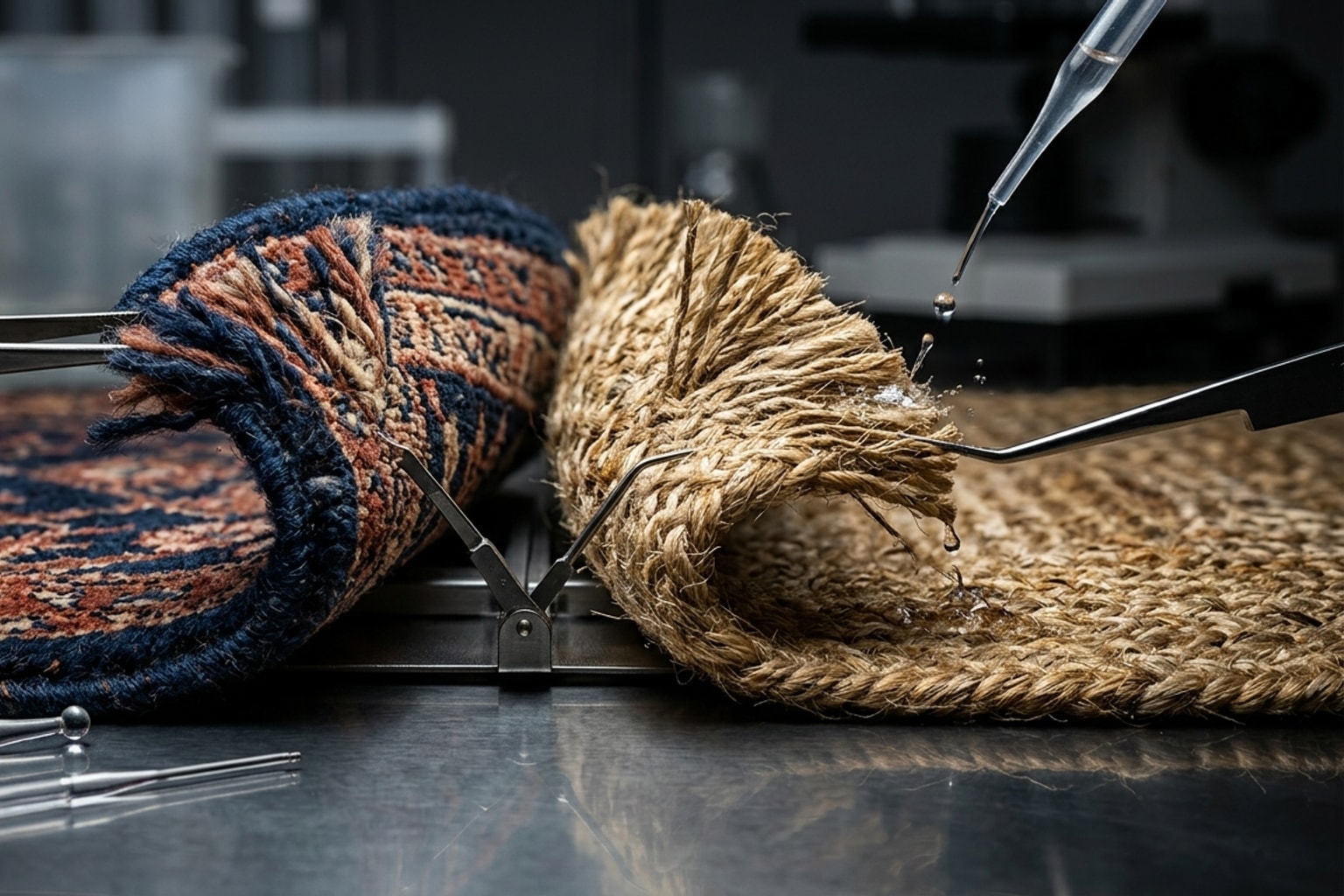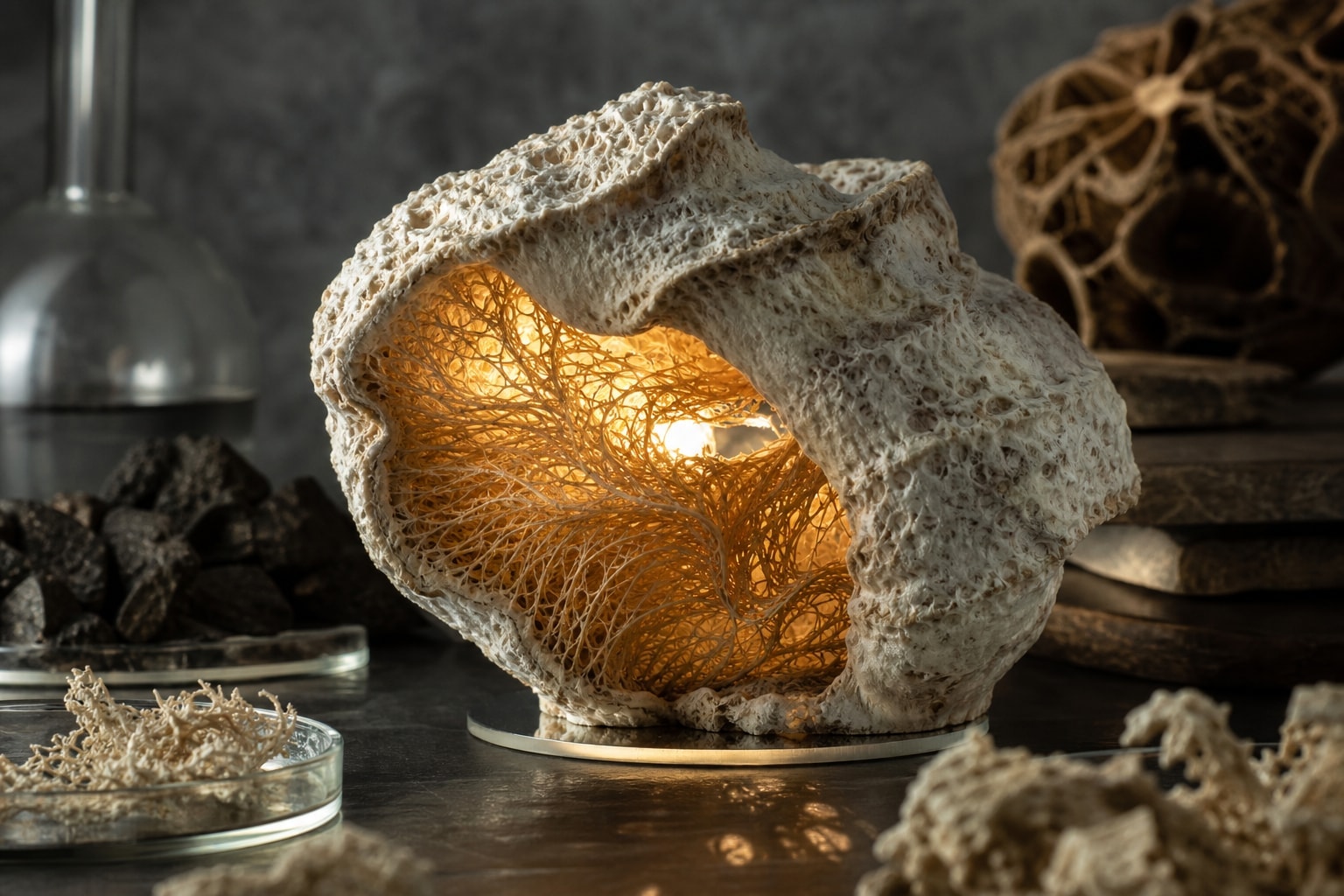
Designer Justin Wan has developed Gourdo, an experimental mushroom lamp built from mycelium and luffa. The project tests how fungal growth and plant fibers can lock together to create structural, light-filtering biomaterials for everyday products.
What happened
The Gourdo lamp relies on natural growth rather than industrial manufacturing. Wan combined the root-like structure of fungi, known as mycelium, with dried luffa sponges.
Luffa provides a rigid, porous skeleton made of plant-based fibers. The mycelium acts as a living glue.
As the fungi grow, they weave their threads through the gaps in the luffa. The two organic materials interlock tightly over time.
This process forms a solid composite material. Once the growth is complete, the material is dried and rendered inert.
The final structure is strong enough to hold a shape but porous enough to filter light. This makes the material highly effective for lighting design.
Wan’s project demonstrates a new way to form objects. Instead of melting and pouring plastic, designers can guide natural organisms to grow into specific molds.
Why it matters
The lighting industry currently depends on synthetic plastics, metals, and glass. These materials require heavy energy use to extract and refine.
Plastics also leave a permanent footprint. They sit in landfills for centuries after a lamp breaks or goes out of style.
Biomaterials offer a compostable alternative. Mycelium is already gaining traction as a replacement for styrofoam packaging.
Pairing mycelium with luffa pushes the concept further. The luffa adds a structural framework that pure mycelium lacks.
The resulting composite also diffuses light in a warm, organic way. This proves that sustainable materials can meet aesthetic design standards.
If designers adopt this method, home goods could eventually be grown rather than manufactured. At the end of their life cycle, these products could simply return to the soil.
The catch
Growing a lamp is much slower than stamping one out of metal. Factories can produce thousands of plastic lamps in a single day.
Mycelium composites require days or weeks to reach their final form. The growth process also requires strict environmental controls.
Temperature and humidity must remain stable to prevent unwanted mold or uneven growth. This makes mass production difficult and expensive.
Durability is another open question. It is unclear how the mycelium-luffa composite will hold up after years of sitting in a living room.
Heat from light bulbs could potentially dry out or damage the organic material. Natural variations also mean no two lamps will look exactly alike, which complicates quality control.
What to verify
Check the exact number of days required to grow a single Gourdo lamp.
Confirm what type of lighting hardware the lamp uses. Low-heat LED bulbs are likely necessary to prevent damage to the biomaterial.
Look for long-term durability tests on the mycelium and luffa composite.
Verify if Wan plans to produce the Gourdo lamp for commercial sale or if it remains a concept piece.
Source trail
The details of the Gourdo lamp originate from a June 2026 report by Designboom.
The publication highlighted the project as an exploration of composite biomaterials for product design.
For more on the intersection of biology and design, check recent material science developments in the architecture and product space.