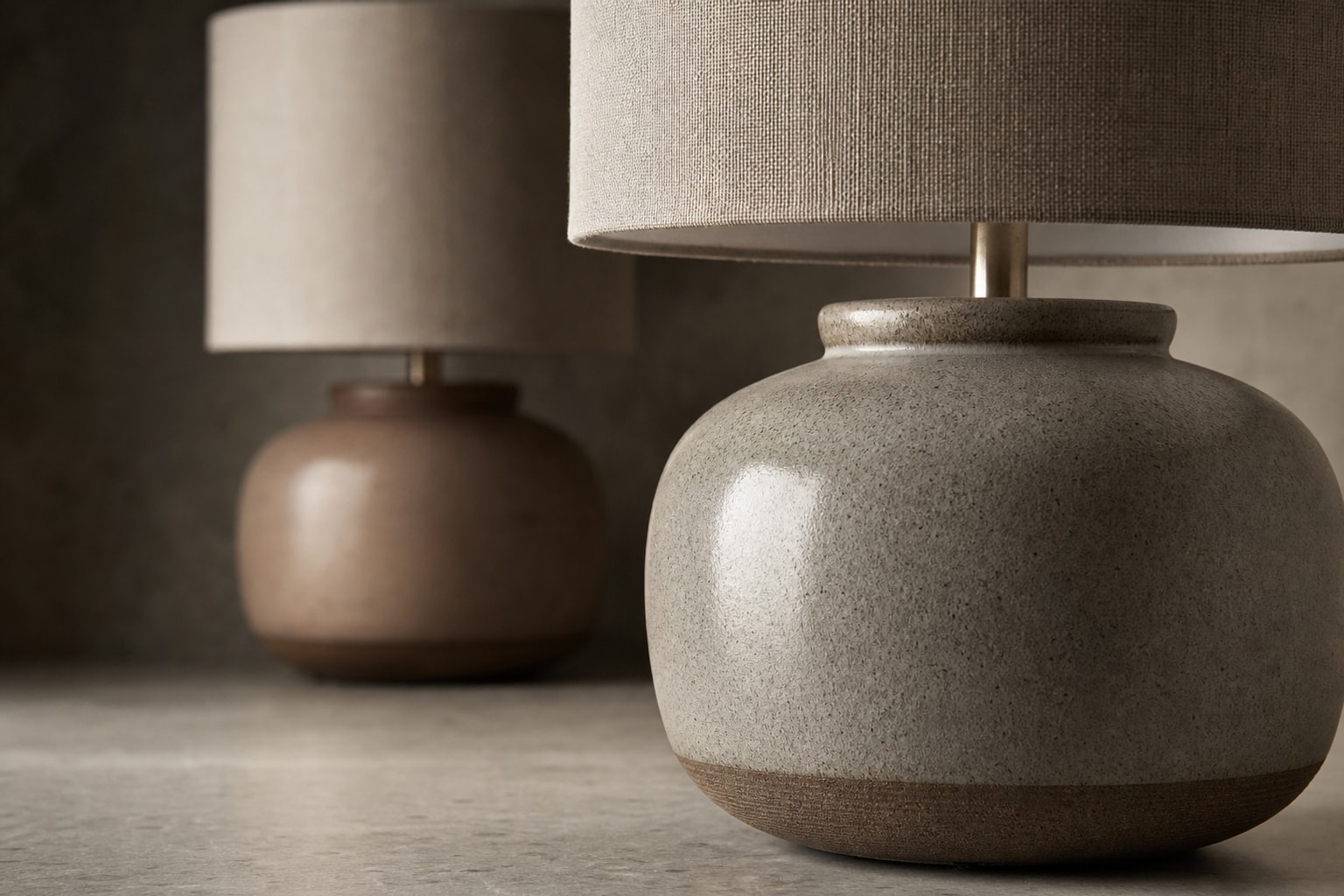
Designer Ilse Crawford has launched a new pair of ceramic and linen lamps for IKEA. The Halgatt collection focuses on quiet design, built to support a room’s decor rather than dominate the surrounding space.
What happened
Crawford added the new Halgatt lamps to her ongoing partnership with the Swedish furniture giant. The release includes a pair of table lamps designed for everyday use.
They feature a simple, traditional mix of materials. The lamps combine solid ceramic bases with woven linen shades.
Crawford chose these classic materials to create a highly versatile shape. The design avoids sharp angles or bright, disruptive colors.
The primary goal of the Halgatt line is intentional subtlety. According to Dezeen, the designer specifically wanted pieces that do not fight for visual attention.
Instead of serving as bold statement pieces, the lamps act as background elements. They provide functional light while fading seamlessly into an existing interior layout.
This release marks the latest chapter in Crawford’s long-running collaboration with the brand. Her previous work with IKEA established a track record of using tactile materials.
The design process prioritized long-term usability. By sticking to a classic form, the lamps can move easily from a bedroom nightstand to a living room desk.
Why it matters
High-profile design collaborations often rely on loud, instantly recognizable shapes. Furniture brands usually want customers to know immediately who designed a specific piece.
Crawford takes the exact opposite approach with the Halgatt series. By designing lamps meant to be ignored, she pushes a quieter aesthetic into the global mass market.
Ceramic and linen are standard materials in high-end, bespoke lighting. Bringing these specific textures to IKEA scales down the cost of natural interiors.
A neutral, classic form also extends the lifespan of the product. Consumers increasingly want versatile items that survive multiple moves and changing personal tastes.
A lamp that supports decor rather than dominating it rarely goes out of style. It adapts to new paint colors and changing furniture layouts.
This approach challenges the fast-furniture model. It encourages buyers to keep the same lighting fixtures for decades instead of replacing them every few years.
The catch
“Supporting decor” is often a polite industry term for plain, unremarkable design. The classic form runs the risk of looking entirely generic on a shelf.
Mass-producing ceramic and linen also comes with inherent quality compromises. Factory-molded ceramics rarely match the unique character and weight of studio pottery.
Furthermore, the initial announcement lacks several concrete details. The exact retail price and the global launch dates remain unclear.
Shoppers hoping for a bold, signature piece from a famous designer will likely feel underwhelmed by the quiet aesthetic.
What to verify
Check local IKEA catalogs for the official Halgatt release date in specific geographic regions.
Confirm the final retail price to see how it compares to Crawford’s previous IKEA lighting designs.
Inspect the physical lamps in a retail store to evaluate the weight of the ceramic bases.
Check the thickness and light diffusion of the linen shades in person.
Look for any additional items joining the Halgatt line. IKEA often releases matching floor lamps or ceiling pendants at a later date.
Verify if the ceramic bases come in multiple glaze colors or just a single neutral tone.
Source trail
The initial details of the Halgatt design surfaced in a Dezeen report covering the latest IKEA design drops.
The design publication highlighted the ongoing collaboration between Crawford and the Swedish retailer.
IKEA has not yet published the full technical specifications, regional availability, or pricing tiers for the new lighting collection.