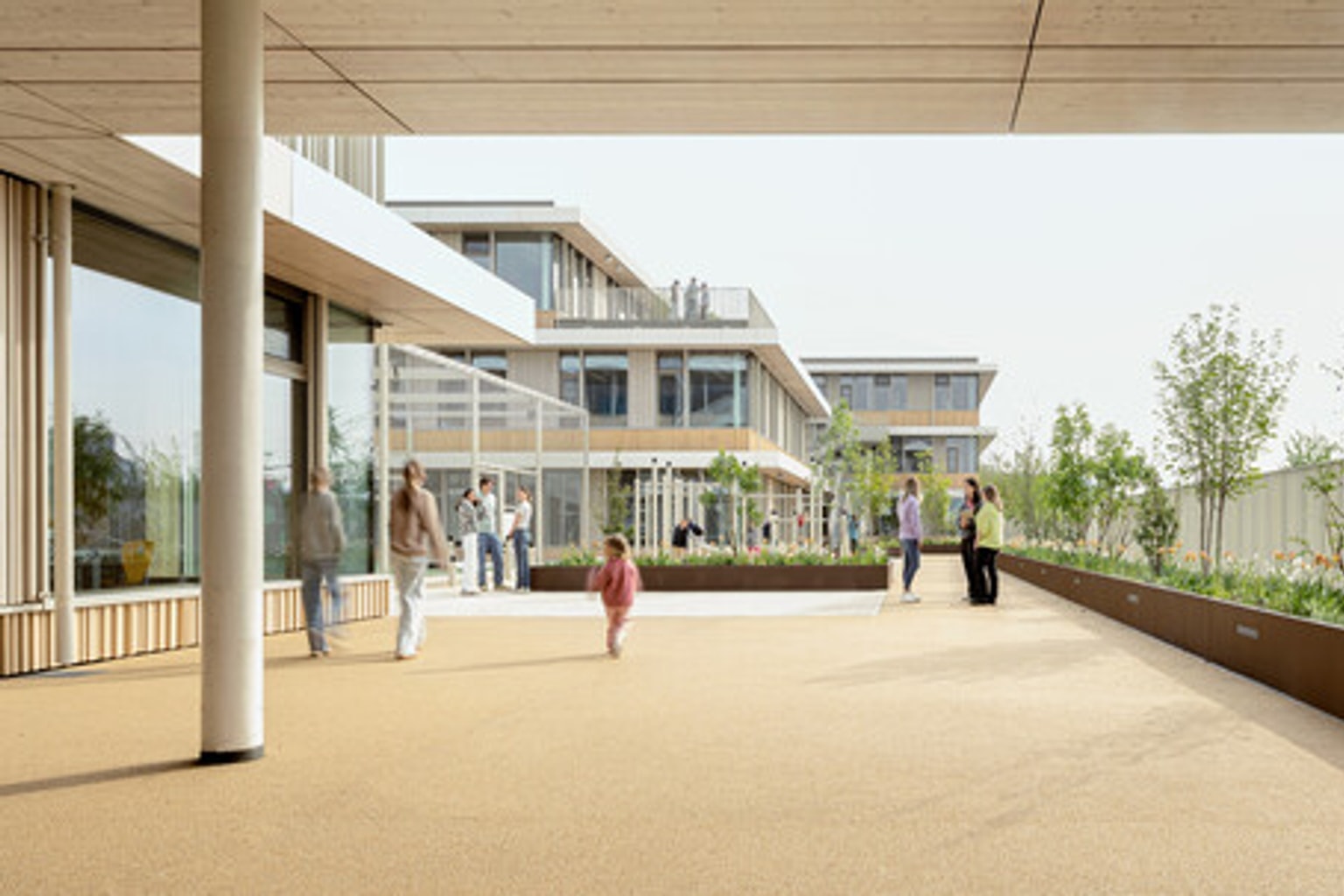
The architectural landscape of educational facilities is undergoing a notable shift, prioritizing the adaptive reuse of existing buildings over entirely new construction. Canadian architecture firm Diamond Schmitt has recently completed phase one of the new Toronto Metropolitan University (TMU) School of Medicine.
Occupying the former Bramalea Civic Centre, the project introduces a modern, wood-clad aesthetic to a previously municipal space. This transformation of a public civic center into an advanced medical education facility is a compelling look at sustainable urban redevelopment, making it a story useful for anyone interested in the future of city infrastructure and sustainable architectural design.
Why it matters
The project is now gaining widespread attention following a feature in the design and architecture publication Dezeen, which highlighted the completion of the project’s initial phase in June 2026. In an era where the environmental impact of new construction is heavily scrutinized, Diamond Schmitt’s decision to adapt the existing Bramalea Civic Centre rather than demolish it serves as a high-profile example of sustainable architectural practices.
The new design incorporates distinctive wood-clad structural elements alongside bold blue accents, contrasting the building’s original civic architecture with a modernized, vibrant academic environment. This visual and structural pivot has caught the eye of the design community, pushing the story into contemporary architectural discourse as a prime example of how aging municipal infrastructure can be successfully given a second life.
The catch
Beyond the surface-level aesthetics, observers are likely looking to comprehend how a traditional municipal building is practically retrofitted to meet the highly specialized, technical needs of a modern medical school. The Bramalea Civic Centre was originally designed for local government and community services, meaning its spatial configuration had to be radically reimagined to accommodate the specific requirements of medical training.
People are also parsing the significance of the specific design choices highlighted in the recent reports. The integration of wood-clad elements is often utilized in contemporary architecture to introduce warmth and biophilic design principles into institutional settings, which can otherwise feel sterile and clinical.
Medical training is notoriously rigorous, and the physical environment can significantly impact student well-being. Meanwhile, the bold blue accents likely serve both aesthetic and practical wayfinding purposes within the sprawling facility.
Also, understanding that this is only “phase one” leaves audiences curious about the total scope of the Toronto Metropolitan University project and what subsequent phases will entail for the broader campus footprint.
What to verify
Because the current reporting focuses primarily on the architectural completion of the first phase, several operational and structural details remain to be confirmed. Journalists and local stakeholders should investigate the timeline and funding structure for the subsequent phases of the TMU School of Medicine development.
It will also be important to verify the exact square footage converted during this initial phase compared to the total planned footprint of the finished school.
Also, the exact capacity of the new facility—specifically how many medical students, faculty members, and administrative staff the phase one space can now support—needs to be confirmed. Researchers should also look into how the local Bramalea community is adapting to the loss or relocation of the services previously housed in the civic centre.
Finally, the specific environmental performance metrics of the retrofitted building warrant further independent verification.
Source trail
The primary details of this architectural development were reported by Dezeen, a leading digital magazine covering architecture, interiors, and design. For more information on the broader concepts utilized in this project, further context appears in the architectural principles of adaptive reuse and how it is shaping modern urban planning.
Diamond Schmitt has successfully delivered the first phase of the Toronto Metropolitan University School of Medicine by creatively repurposing the former Bramalea Civic Centre. By integrating warm wood-clad structural elements and striking blue accents, the Canadian architecture firm has begun transforming a traditional municipal building into a modern, specialized environment for healthcare education.