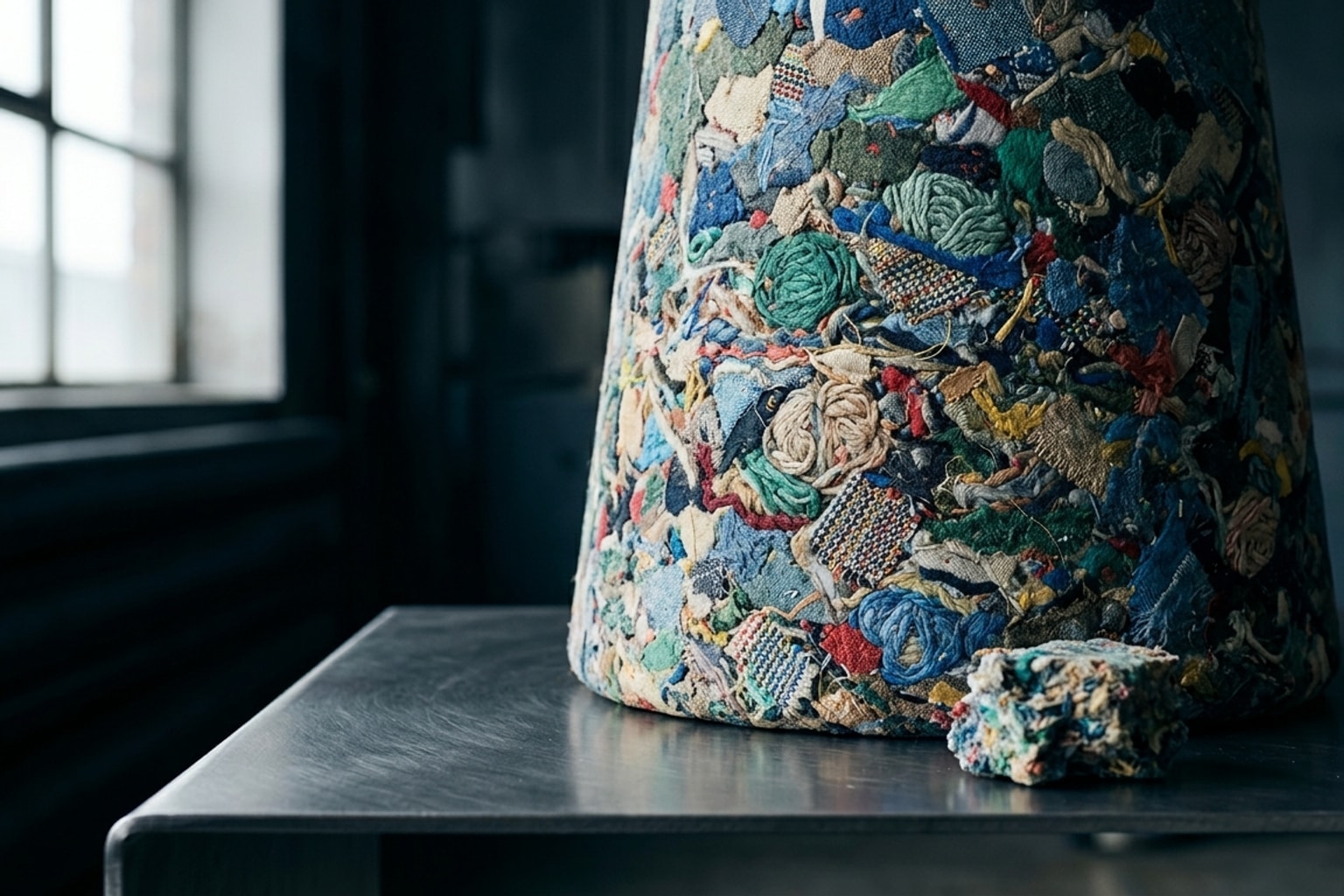
Designers have transformed discarded clothing into a new line of solid furniture. By turning defective and unsold garments into an artificial stone, the project reimagines how the design industry handles textile waste.
What happened
A new furniture collection turns soft fabric waste into rigid objects. The project uses discarded, defective, and unsold garments as its primary raw material.
Designers process these scrap textiles into a dense, artificial stone. The material forms the basis of a collection named Chromaterico.
The project involves design entities Archeomaterico and Chroma Composites. Together, they developed a method to harden loose fibers into structural material.
The resulting textile objects function as solid furniture. This allows designers to mold and shape recycled clothing just like traditional stone or wood.
The process rescues garments that never reached consumers. Defective items from factory floors and unsold stock bypass the landfill entirely.
Instead, these fabrics become the foundational input for the composite material. The furniture pieces display unique textures based on the original clothing used.
Why it matters
The global apparel industry generates massive volumes of textile waste every year. Unsold stock and defective garments often go straight to incinerators.
Finding uses for this waste remains a major challenge. Traditional fabric recycling usually involves shredding garments to make lower-quality yarn or insulation.
This project offers a different pathway for discarded textiles. By converting soft waste into hard furniture, the designers lock the material into a long-lasting form.
The artificial stone provides a durable alternative to natural rock or synthetic plastics. It keeps existing materials in circulation rather than extracting new resources.
The Chromaterico collection shows that industrial leftovers can become high-value items. It shifts textile recycling from hidden industrial applications to visible consumer design.
Furniture made from recycled clothing also stores the waste for decades. This delays the environmental impact of throwing the fabric away.
The catch
Creating composite stone from fabric requires chemical binders. Designers typically use resins or glues to harden the soft textiles into a solid mass.
These binding agents complicate future recycling efforts. Once loose fibers mix with hardened resin, separating them again is nearly impossible.
The final furniture pieces might not be recyclable at the end of their lifespan. This turns the process into a delayed disposal method rather than a closed loop.
Scaling up this type of production also presents hurdles. Processing mixed fabrics into a uniform, stable composite is often slow and expensive.
The volume of waste used in high-end furniture is relatively small. This method cannot solve the massive scale of global textile overproduction on its own.
What to verify
Review the specific binders and resins used by Chroma Composites. The environmental impact depends heavily on whether these chemicals are bio-based or synthetic.
Check the exact ratio of textile waste to binding agents in the Chromaterico material. Some composites contain more plastic resin than actual recycled content.
Look for data on the durability and weight limits of the artificial stone. Structural furniture must meet strict safety standards before entering commercial markets.
Confirm the retail availability and pricing of the Archeomaterico collection. High prices often limit these sustainable designs to niche luxury markets.
Source trail
The design and architecture magazine Designboom published the initial details about the Chromaterico collection. Their report highlights the collaboration between Archeomaterico and Chroma Composites.
The source article outlines how discarded and unsold garments serve as the raw material input for the artificial stone.