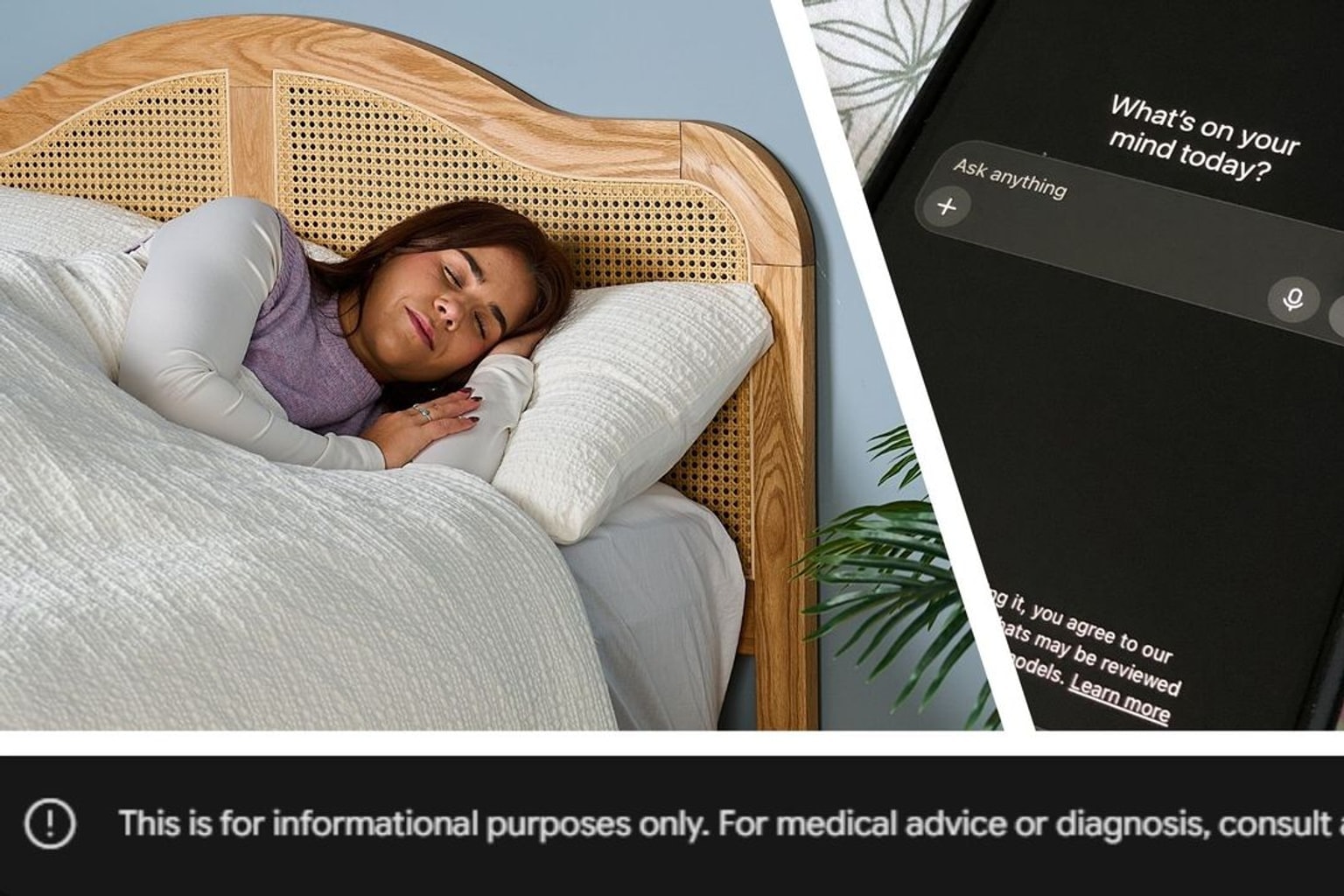
People increasingly turn to artificial intelligence for medical help. A recent test asked three popular chatbots for advice on falling asleep.
A board-certified sleep doctor reviewed the answers and found them highly disappointing.
Why it matters
Millions struggle with insomnia every night. Seeking quick relief, many turn to the internet for immediate cures.
Chatbots offer instant, confident answers. Tools like ChatGPT, Microsoft Copilot, and Google Gemini promise personalized health guidance at the push of a button.
OpenAI created ChatGPT, while Google developed Gemini. Microsoft powers Copilot with similar underlying technology.
A writer at Tom’s Guide recently tested this modern impulse. They asked the three major AI models for strategies to fall asleep fast.
The prompt also asked how to stay asleep through the night. The writer then took the generated answers to Dr.
Jade Wu.
Dr. Wu is a behavioral sleep medicine specialist.
She evaluated the advice for accuracy, safety, and actual clinical usefulness.
The catch
Dr. Wu reviewed the chatbot responses and was not impressed.
The AI models offered generic, surface-level tips.
They suggested common ideas like avoiding screens, keeping the room cool, and drinking chamomile tea. These standard tips often fail chronic insomnia sufferers.
The AI lacked the nuance needed for actual medical treatment. Some advice actively contradicted modern sleep science.
For example, focusing too hard on strict sleep hygiene can actually increase anxiety. Dr.
Wu noted that rigid rules often make insomnia much worse.
Patients stress over following every step perfectly. If they fail to fall asleep, they panic about breaking the rules.
The chatbots presented answers with absolute certainty. They lacked the cautious tone typically used by medical professionals.
The chatbots failed to ask any clarifying questions. A real doctor investigates underlying causes like sleep apnea or restless leg syndrome.
AI tools simply regurgitate popular internet articles. They predict the next word based on vast training data.
They do not synthesize medical literature or treat symptoms. They just repeat the most common advice found online.
This makes the story highly relevant for anyone tempted to use software as a substitute for a medical professional. The illusion of authority hides a lack of real understanding.
People trust the clean, formatted output of a chatbot. They assume the machine has cross-referenced the data with medical journals.
In reality, the machine just summarizes popular blogs. It cannot distinguish between an old wives’ tale and a peer-reviewed clinical trial.
What to verify
Researchers must test how often people rely solely on AI for health issues. The scale of this behavior remains largely unknown.
Medical boards must evaluate chatbot medical advice. They must determine if these tools cause active harm by delaying real treatment.
Tech companies might face pressure to add stronger medical disclaimers. Current warnings are often small and easily ignored.
It remains unclear if future AI models will integrate verified clinical guidelines. Software teams could potentially restrict health answers to approved medical databases.
Clinical trials must determine if chatbots can ever safely screen for complex conditions. Sleep apnea requires physical testing, not text prompts.
Watch for new studies comparing AI health outcomes against traditional doctor visits. This data will shape future regulations.
Source trail
The original experiment and the doctor interview appeared on Tom’s Guide. The technology publication frequently tests consumer software.
Journalists continue to probe the limits of generative AI. These tests reveal where algorithmic confidence outpaces actual capability.
Dr. Jade Wu is a recognized expert in behavioral sleep medicine.
Her insights often highlight the gap between internet myths and clinical science.
The American Academy of Sleep Medicine provides verified resources for those struggling with chronic insomnia.
Their guidelines prioritize individualized care over generic checklists.
Chatbots provide fast answers but poor medical advice. They fail to understand individual health contexts.
A sleep expert found AI insomnia tips generic and potentially anxiety-inducing. Strict rules often make sleep problems worse.
Real medical treatment requires personalized investigation. Internet summaries cannot replace a trained doctor.
What to watch next
The useful follow-up is whether the next reports add verifiable detail: dates, locations, measurements, documents, expert review, or a primary record. The source trail starts with the original Tom’s Guide report and more Tom’s Guide coverage while watching for primary-source updates.
Until those details are public, the careful version is to treat the story as interesting evidence in motion rather than a finished conclusion.
That is also why the story is worth treating carefully. It gives the update a concrete object or event to follow, with the limits still attached.