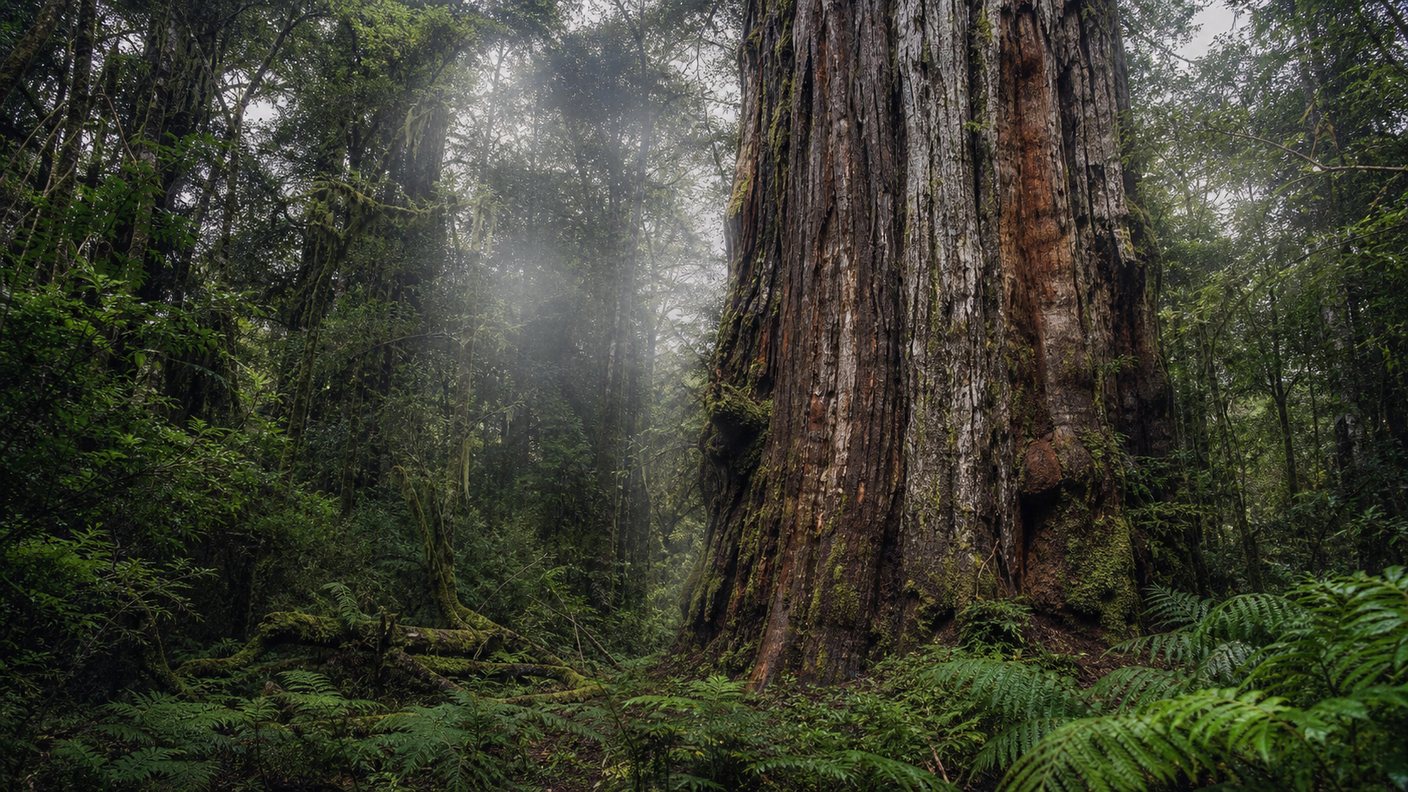
Quick answer: Gran Abuelo, also called Alerce Milenario, is a huge Patagonian cypress in Chile’s Alerce Costero National Park. A 2022 estimate put it at about 5,484 years old, but that number depends on modeling because researchers could not core the whole trunk.
Great Grandfather may be older than written civilization.
That is strong enough for a scroll-stopping story, but the full picture is more interesting than the number.
Gran Abuelo is not just an old tree. It is a test of how people talk about ancient living things online: part wonder, part science, part conservation warning.
Why people clicked
The story worked because it had a perfect public-facing shape. One image.
One giant claim. One human nickname.
One number that feels almost impossible.
The hook is simple: Great Grandfather, a 5,484-year-old Patagonian cypress, could be the world’s oldest tree.
That framing makes people click because it turns a forest into a character. “Great Grandfather” is easier to remember than Fitzroya cupressoides.
A single ancient trunk becomes a time machine.
But the click is only the start. The better story is about how scientists estimate the age of something living without damaging it.
The responsible version keeps the emotional hook, but adds the caveat that matters: the 5,484-year figure is an estimate, not a universally settled direct count.
What the story is about
Gran Abuelo, or Alerce Milenario, grows in a ravine in Chile’s Alerce Costero National Park. The species is Fitzroya cupressoides, often called alerce or Patagonian cypress.
In 2022, the tree drew international attention after Chilean environmental scientist Jonathan Barichivich estimated that it could be 5,484 years old. That would make it older than Methuselah, the famous bristlecone pine in California often cited as the oldest known non-clonal tree.
The reason the story is scientifically delicate is the method. Researchers could not simply count rings all the way to the center.
The tree is too wide, and a full invasive sample could damage living tissue. According to reporting by Science and Smithsonian Magazine, the team counted about 2,400 rings from a partial core and used statistical modeling to estimate the missing inner growth.
That makes the tree extraordinary either way. Even the confirmed partial count places Gran Abuelo among the planet’s ancient living witnesses.
The larger estimate is the part that made the story go viral.
Why this tree matters
Ancient trees change the way people think about time. A trunk like Gran Abuelo is not just scenery; it is a living record of weather, fire, renewal, and human pressure over thousands of years.
That is why the story is more than a record chase. If the higher estimate is right, the tree began growing before many of the world’s oldest written histories.
If the estimate is revised downward, it is still an extraordinary living organism that deserves careful protection.
The strongest reason to care is not the number alone. It is the idea that a single tree can hold centuries of climate evidence while remaining vulnerable to footsteps, soil compaction, and careless attention.
What to know before sharing
The safest share line is not “the oldest tree in the world.” A better line is: Gran Abuelo may be the oldest known non-clonal tree, based on an estimate that combines a partial ring count with modeling.
That distinction matters because viral nature posts often turn a careful scientific claim into a certainty. The wonder survives the caveat.
In fact, the caveat makes the story better: scientists are trying to understand the age of an ancient tree without harming it.
There is also a conservation angle. Several reports noted that the tree is vulnerable because visitors can compact soil and damage roots around it.
A viral post should send attention toward protection, not just toward a record claim.
If share the story, keep the nickname, the image, and the age estimate, but include the uncertainty. The real headline is not only that one tree may be 5,484 years old.
It is that a living forest archive still stands, and people are debating how to study it without destroying what makes it valuable.