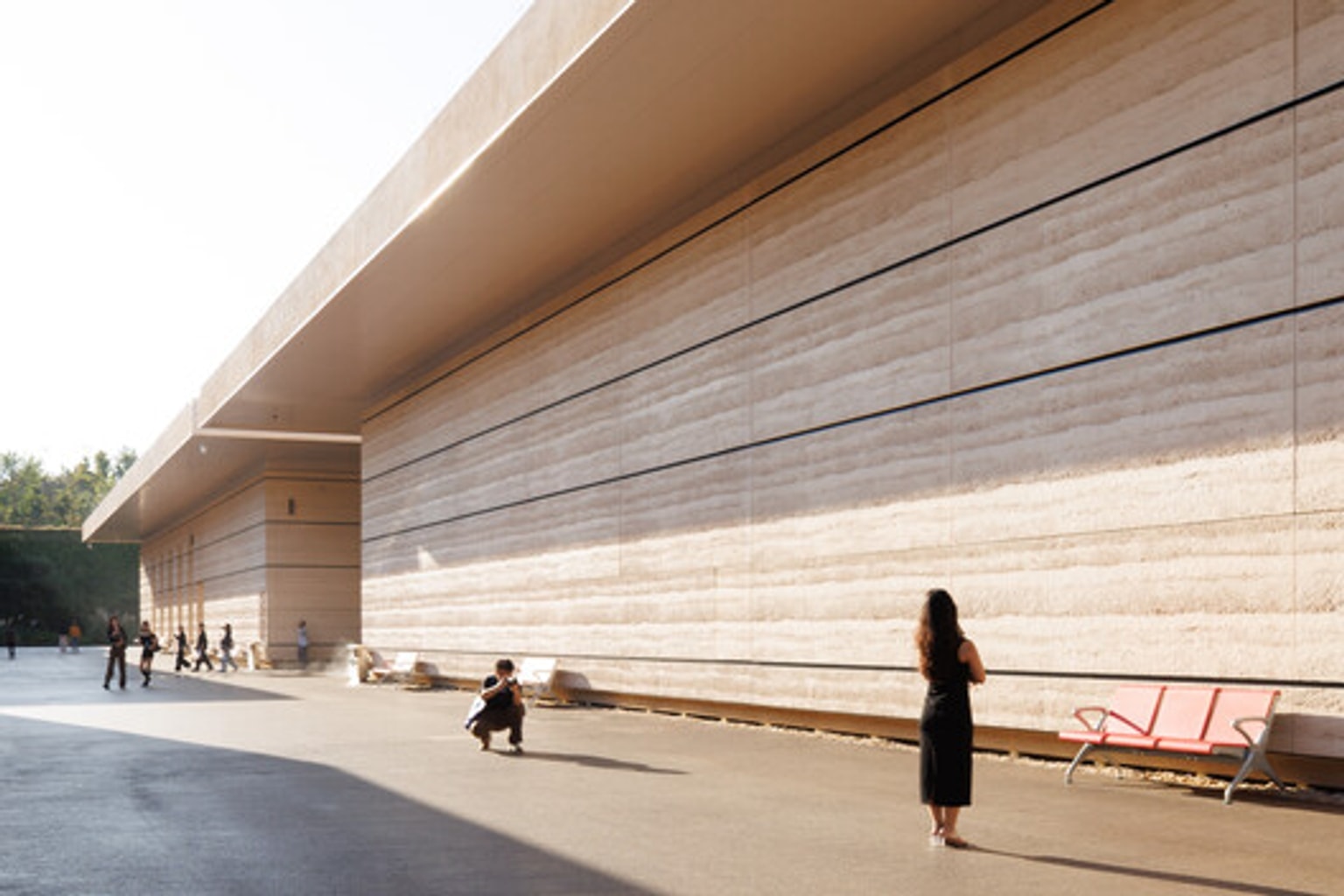
China has built its largest fully sunken archaeological museum in Zhengzhou. The nearly 20,000-square-meter Dahecun Site Museum sits underground to protect the 6,800-year-old ruins of the Yangshao Culture.
The design hides the massive building beneath the natural landscape.
What happened
The China Architecture Design and Research Group (CADG) led the project. The museum is a core piece of the larger Dahecun National Archaeological Site Park.
The site itself has rested in the middle and lower reaches of the Yellow River for over 6,800 years. It serves as a benchmark for the Yangshao Culture in the Central Plains region.
Designers chose to sink the entire 19,977-square-meter structure into the earth. This approach steps the building back from the actual archaeological remains.
By burying the museum, the architects dissolved the building’s visual mass. Natural processes and vegetation can now reshape the land over the roof.
The project involves a massive team. Chen Tongbin, Jing Quan, and Xu Yuanqing served as lead architects.
The team also included specialized heritage conservationists, landscape architects, and structural engineers.
The facility is scheduled for completion in 2025. It will operate as the first venue in China dedicated to a comprehensive display of the Yangshao Culture.
Why it matters
The Dahecun site holds outstanding historical significance. It provides a rare window into Neolithic life along the Yellow River.
Before this project, China lacked a dedicated, large-scale venue to comprehensively present the Yangshao Culture. This ancient culture is known for its distinct painted pottery and early agricultural settlements.
The sunken design represents a shift in how China handles major archaeological sites. Instead of building a towering monument over the ruins, the museum defers to the landscape.
This approach protects the fragile excavation areas from heavy structural loads. It also maintains the historical atmosphere of the site.
Visitors will experience the artifacts in a setting that mimics an active archaeological dig. The underground layout naturally controls light and temperature, which helps preserve ancient materials.
The museum anchors a broader push to develop the Dahecun National Archaeological Park. This park will serve as a major educational and cultural hub in Zhengzhou.
The catch
Building a massive underground structure next to a fragile, 6,800-year-old archaeological site carries severe risks.
Deep excavations require intense structural engineering and plumbing solutions. Water management is critical.
A sunken 20,000-square-meter building in a river basin could face severe flooding risks if drainage systems fail.
The project relies heavily on complex HVAC and intelligent systems to maintain safe humidity levels. Any failure in these systems could damage the very artifacts the museum was built to protect.
Additionally, maintaining a green roof over a massive subterranean museum requires constant upkeep.
What to verify
Check the official opening dates as the 2025 completion year approaches. Large-scale public architecture projects frequently face construction delays.
Monitor how the museum handles heavy rainfall in the Zhengzhou region. The city has experienced severe flooding in recent years.
Review the final exhibition layouts to see how the museum integrates the actual excavation pits with the new display areas.
Source trail
Details about the Dahecun Site Museum’s design and engineering teams come from ArchDaily Global. The architectural data was provided by the China Architecture Design and Research Group.
Additional context on the Yangshao Culture is available through regional historical archives.