Urban living frequently demands compromise, particularly when square footage is at a premium. Still, a newly completed project in Poland proves that severe spatial constraints can yield remarkable creative solutions.
Polish designer Dawid Konieczny has recently unveiled a 34-square-metre apartment in Warsaw’s Port Praski district that borrows heavily from the “ingenuity and efficiency” of maritime architecture. By looking to the past—specifically the robust aesthetic of the area’s interwar docklands—the designer has crafted a highly functional living space that feels both expansive and deeply rooted in its local context.
This detail matters with anyone looking for practical, high-design inspiration to maximize a minimal urban footprint without sacrificing historical character.
Why it matters
The project has recently caught the attention of the international design community, highlighted in a prominent feature by Dezeen. In an era where housing affordability and urban density are pressing global issues, micro-apartments are no longer a niche curiosity; they are a daily reality for millions.
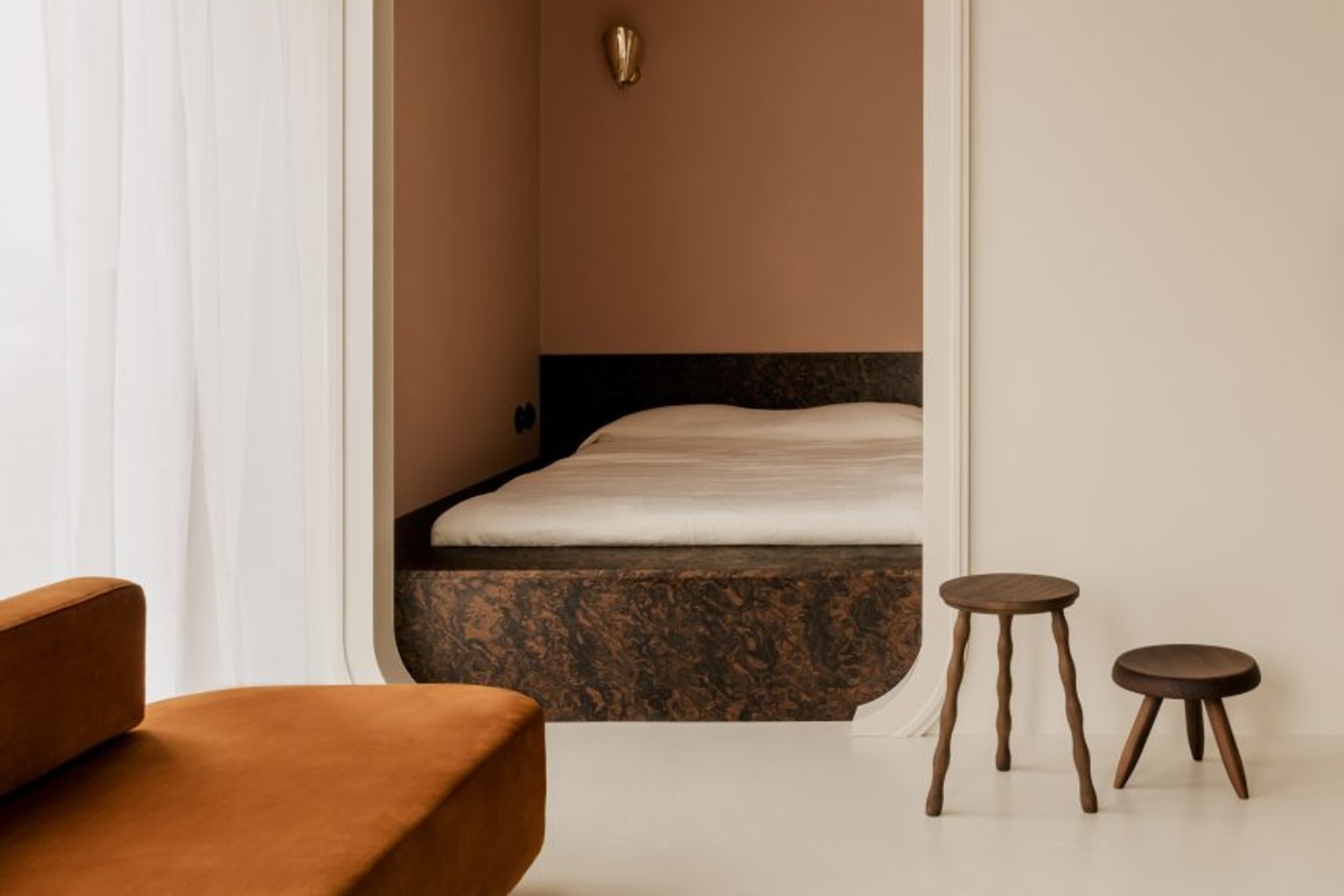
Consequently, architectural solutions that elevate these compact spaces from claustrophobic to comfortable are highly sought after. Konieczny’s design is resonating right now because it successfully deploys curved walls and bespoke joinery—techniques often reserved for luxury yachts or high-end custom homes—to make the absolute most of the available space.
The visual contrast between the apartment’s robust, dockland-inspired elements and the smooth, space-saving curves offers a fresh take on minimalist urban living.
The catch
Beyond the striking photography, people are looking to decode exactly how maritime architecture translates into a static, landlocked apartment. On a boat, every square inch must serve a distinct purpose, often concealing storage or mechanical systems behind sleek, curved bulkheads that allow for fluid movement in tight quarters. Konieczny appears to have applied this exact philosophy to the Warsaw apartment.
Audiences want to understand the mechanics of this space-saving ingenuity. How do the curved walls improve the flow of a 34-square-metre layout?
Traditional sharp corners often create dead zones in micro-apartments, whereas sweeping curves can guide the eye and the occupant smoothly from one functional zone to the next. Also, people are curious about the historical resonance.
The Port Praski district has a rich heritage rooted in its interwar docklands. Integrating this robust, industrial history into a highly refined, modern interior shows how neighborhood context can inform private residential design, preventing a tiny apartment from feeling like an isolated, sterile box.
What to verify
While the initial reports highlight the overarching maritime theme and the use of curved walls, several design specifics warrant further investigation. Design enthusiasts will want to verify the exact configuration of the bespoke joinery.
Does it include transformative furniture, such as fold-away beds or expanding dining surfaces, or is it primarily focused on built-in, flush storage?
Also, it remains to be seen what specific materials were utilized to channel the “robust” dockland aesthetic mentioned in the project’s brief. Are there exposed metals, reclaimed woods, or specific tactile finishes that contrast with the smooth interior curves?
Finally, understanding the exact floor plan—how the 34 square meters are divided between sleeping, living, cooking, and washing areas—will provide a clearer picture of the project’s true spatial efficiency.
Source trail
Dawid Konieczny’s 34-square-metre apartment in Warsaw’s Port Praski district is a testament to the power of context-driven design. By adopting the space-saving curves and bespoke joinery of maritime architecture, the project honors the neighborhood’s interwar dockland history while offering a highly efficient, modern blueprint for micro-living.
The primary details of this architectural project were brought to light by the design publication Dezeen, which regularly features innovative residential interiors and micro-living solutions. Background on the designer’s broader portfolio can be explored through architectural archives tracking contemporary Polish design trends.