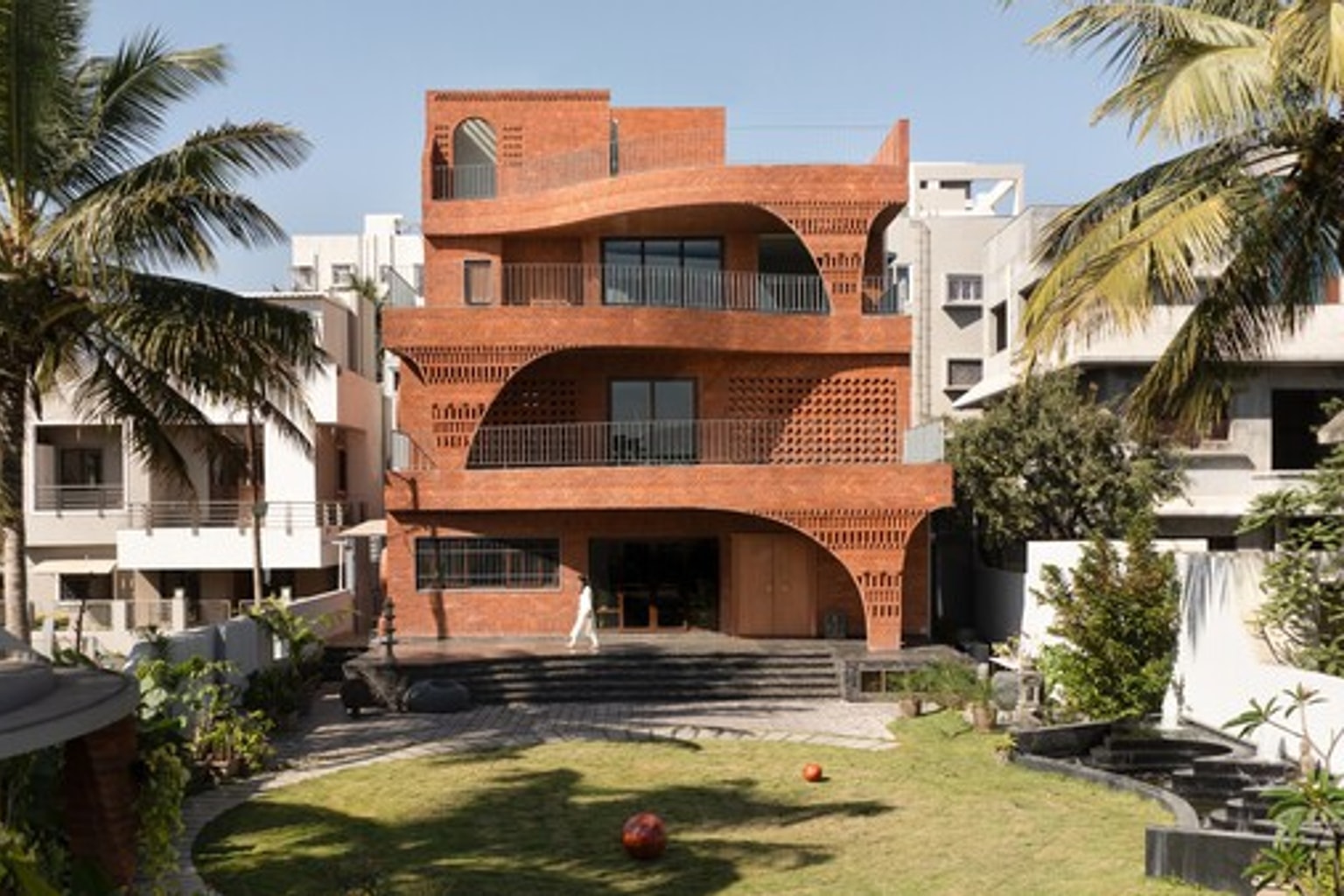
The western Indian state of Maharashtra is known for its punishingly hot and dry climate, presenting a formidable challenge for residential design. In the town of Ahilyanagar, a newly unveiled 7,000-square-foot residence attempts to tackle these environmental extremes head-on.
Dubbed the “Anthill House” and designed by Kaushal TaTiya Architects, the structure prioritizes thermal comfort and climate responsiveness over conventional, energy-intensive cooling methods. This project is a compelling example to share with design enthusiasts and environmental advocates because it shows how localized architectural strategies can elegantly solve the pressing global challenge of extreme heat without sacrificing aesthetic ambition.
Why it matters
The Anthill House recently captured the attention of the global design community following its feature on ArchDaily, a leading architectural publication. As global temperatures continue to rise, the architectural industry is increasingly spotlighting projects that offer practical, scalable solutions to extreme heat and intense sunlight.
The design brief for this expansive 7,000-square-foot property specifically demanded a response to Ahilyanagar’s harsh local climate, characterized by low humidity and soaring temperatures. Consequently, the project is circulating among professionals and enthusiasts who are tracking the shift away from glass-heavy, greenhouse-like modernism toward regionally adapted, passive-cooling frameworks.
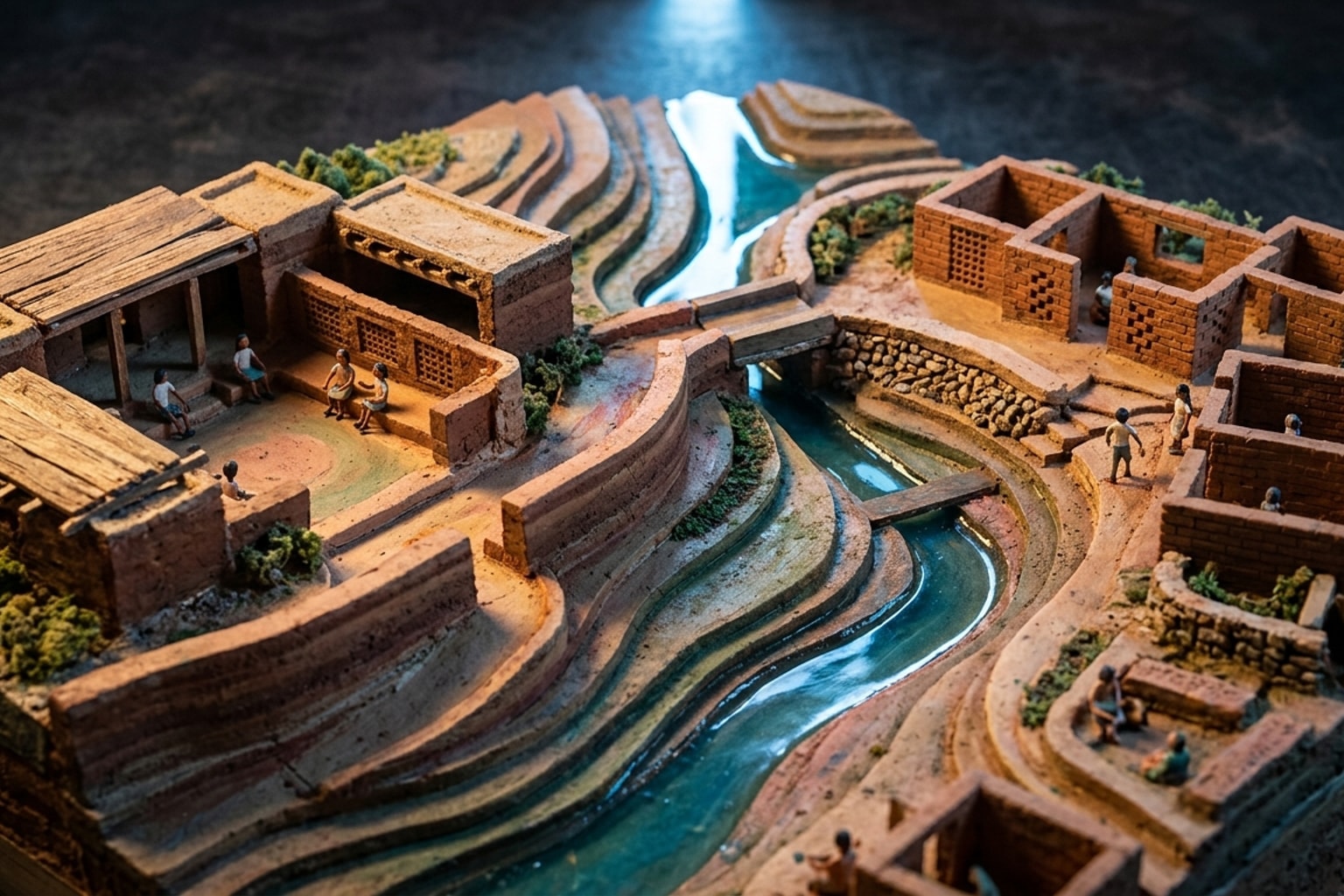
The evocative name “Anthill House” also suggests a biomimetic approach, drawing conceptual inspiration from the natural world where termite mounds and anthills use intricate internal ventilation networks to maintain stable interior temperatures despite blistering external heat.
The catch
Audiences engaging with the Anthill House profile are primarily looking to decode the specific architectural interventions that allow such a large footprint to remain cool. A 7,000-square-foot home inherently requires significant energy to regulate if relying solely on mechanical air conditioning. The practical question is how the spatial layout, material selection, and structural orientation actively reduce heat gain.
While the initial project summary highlights the mitigation of intense sunlight and extreme temperatures, design practitioners are likely searching for the technical details behind these claims. They are trying to understand if the architects utilized deep overhangs, strategic cross-ventilation, thermal mass materials like locally sourced stone or brick, or shaded internal courtyards to achieve the desired microclimate.
Also, the broader public is interested in the aesthetic outcome: how a house designed primarily as a fortress against the sun manages to remain a welcoming, livable, and visually striking family home.
What to verify
To fully evaluate the success of the Anthill House, several specific design and performance metrics require further verification:
- Passive Cooling Techniques: We need to confirm the exact passive strategies employed, such as the use of specific shading devices, the incorporation of thermal mass in the walls, and the layout of ventilation channels.
- Material Palette: Investigating whether the materials were locally sourced and how their specific thermal properties contribute to the building’s overall heat reduction.
- Energy Efficiency Data: Verifying the actual reduction in mechanical cooling requirements compared to a standard home of similar size in the Maharashtra region.
- Biomimetic Elements: Clarifying to what extent the “Anthill” moniker is a metaphor versus a literal translation of biological ventilation systems into the home’s structural engineering.
Source trail
Kaushal TaTiya Architects’ Anthill House in Ahilyanagar is a massive 7,000-square-foot residential project defined by its rigorous response to Maharashtra’s hot, dry climate. By focusing primarily on reducing heat and managing intense sunlight, the residence serves as a modern template for climate-adapted architecture in extreme weather zones.
This coverage is based on the project profile “Anthill House / Kaushal TaTiya Architects,” published by ArchDaily Global under their technology and culture category.
What to watch next
The useful follow-up is not only that Anthill House / Kaushal TaTiya Architects is circulating, but whether the next reports add verifiable detail: dates, locations, measurements, documents, expert review, or a primary record that the public can inspect. The source trail includes more ArchDaily Global coverage while watching for primary-source updates. Until those details are public, the careful version is to treat the story as interesting evidence in motion rather than a finished conclusion.
That is also why the story is worth treating carefully. It gives the update a concrete object or event to follow, but it should travel with the limits still attached: what is known now, what remains provisional, and what would make the claim stronger when the next update arrives.