The everyday carry (EDC) movement has undergone a radical transformation over the past decade, shifting from bulky utility belts to ultra-minimalist setups. As consumers abandon thick leather bifolds for slim, front-pocket cardholders, the technology industry is adapting its form factors to match.
A recent highlight from tech publication SlashGear underscores this transition, showcasing how modern consumer electronics are being engineered to take up no more space than a standard credit card. Anyone looking to streamline their daily routine without sacrificing technological utility will find this evolution in personal gadgets deeply relevant and useful for fellow minimalists.
Why it matters
The conversation around miniaturized tech is gaining fresh momentum as manufacturers successfully overcome previous limitations in battery chemistry and printed circuit board design. According to SlashGear, the era of the bulky accessory is fading, replaced by a new category of devices explicitly designed to slide into a wallet’s card slot.
This trend is heavily driven by the widespread adoption of minimalist wallets. Consumers no longer want to carry items that interrupt the sleek lines of their clothing or add unnecessary weight.
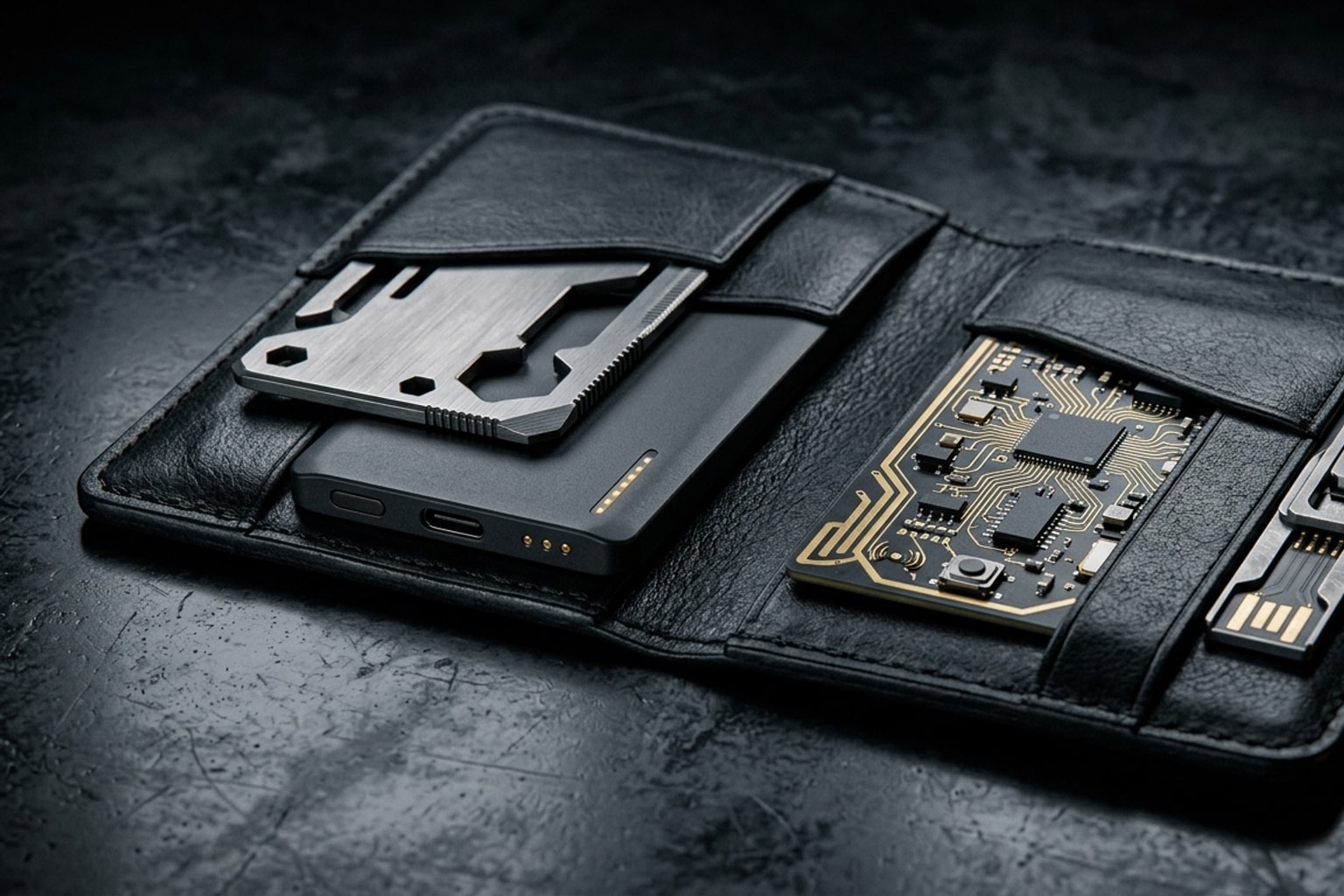
In response, tech companies are producing ultra-thin tracking devices, such as the Ugreen Finetrack slim wallet tracker, which help users locate lost items without adding bulk. Also, professional networking has seen a digital shift, with products like the Dot digital business card allowing users to share contact information via near-field communication (NFC) using a single, credit card-sized piece of plastic or metal.
Even emergency lighting has been flattened, as seen with ultra-slim LED cards. The convergence of these innovations means that a modern wallet can double as a highly capable tech toolkit.
The catch
Beyond the initial novelty of a credit card-sized gadget, consumers are trying to determine if these ultra-thin devices represent a genuine upgrade to their daily lives or if they are simply gimmicks destined for the junk drawer. The primary concern centers around the trade-offs required to achieve such extreme thinness.
The practical question is how durability is impacted when a device is compressed to a mere fraction of an inch. A wallet is subjected to constant flexing, pressure, and body heat—conditions that are notoriously hostile to delicate electronics.
Also, battery life remains a critical question. While traditional tracking tags use replaceable coin-cell batteries, wallet-sized alternatives often rely on custom-shaped, non-replaceable power cells.
Consumers are analyzing whether the convenience of a slim profile outweighs the potential frustration of a device that might only last a year or two before losing its charge entirely. Ultimately, the public is evaluating the true cost-to-benefit ratio of downsizing their tech accessories.
What to verify
As this category of ultra-thin everyday carry items expands, several functional and environmental claims require independent verification. First, reviewers must test the actual lifespan of the built-in batteries under real-world conditions, particularly for devices that cannot be easily recharged.
Second, the environmental impact of these gadgets warrants closer scrutiny. If a wallet-sized tracker or digital business card cannot be repaired or its battery cannot be replaced, it risks becoming premature electronic waste.
Investigators should look into the recycling programs offered by manufacturers of these slim devices. Finally, the signal strength of flattened Bluetooth trackers needs to be compared against their thicker, traditional counterparts to ensure that reducing the antenna size does not compromise the core functionality of the device.
Source trail
The ongoing miniaturization of personal technology has reached a point where capable gadgets—from Bluetooth trackers to digital networking tools—can now comfortably reside in the card slots of a minimalist wallet. While this offers unprecedented convenience for everyday carry enthusiasts, it also introduces new questions about device longevity, durability under pressure, and long-term environmental sustainability.
This analysis is based on reporting and trend identification by SlashGear, which highlighted the growing market for wallet-sized technology. Additional context about the devices mentioned, such as digital business cards and slim trackers, was derived from the publication’s visual documentation of the category.