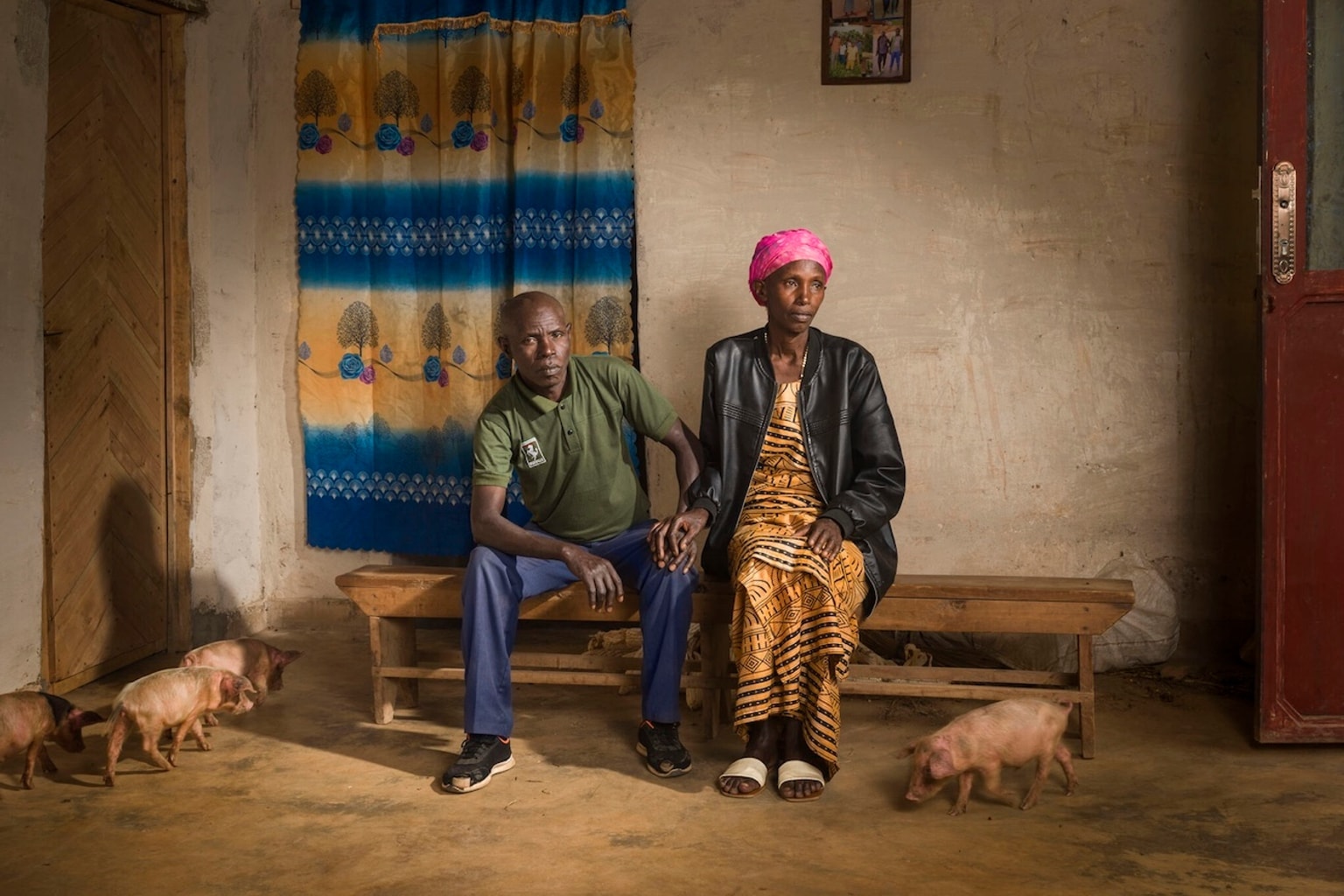
Dutch photographer Jan Banning has released a new portrait series titled Blood Bonds. The project features Rwandan genocide survivors posing next to the very neighbors who killed their families.
What happened
Banning collaborated with writer Dick Wittenberg to document 18 pairs of survivors and perpetrators. The collection shows these individuals sitting together in solemn, restrained portraits.
In 1994, Hutu extremists massacred between 500,000 and 800,000 Tutsis and moderate Hutus. The slaughter lasted roughly 100 days.
Attackers mostly used machetes at local churches, schools, and roadblocks. Because the violence was intimate, survivors often had to live next door to the people who harmed them.
Since 2005, more than 115,000 Rwandans have joined sociotherapy groups. In these sessions, killers express remorse and ask for forgiveness.
They also sometimes reveal where they buried the victims’ bodies. This allows families to properly bury their dead.
One portrait features Marianna, who survived by hiding among bodies in a church. She later escaped to Bisesero, where many Tutsis died after French peacekeeping forces abandoned them.
She poses with Marc, the man who killed her sister and looted their home.
Another image shows Liberatha, who lost three of her 11 children during the attacks. She sits alongside Alphonse Ranyemera, a man who helped murder her twin children.
Why it matters
The portraits strip away immediate context. Banning intentionally creates visual ambiguity in the images.
Without reading Wittenberg’s accompanying text, observers cannot easily tell who committed the crimes. This confusion highlights the unsettling reality of community-driven violence.
Banning notes that the project questions human nature. He asks whether the perpetrators could have been victims under different circumstances.
The series also contrasts with Western justice systems. Banning conceived the project after a 2023 assignment in Rwanda.
A local trade union worker named Jack told him that his family forgave his mother’s killer. The killer had been a very good friend of the family before the genocide.
After finding the mother’s body in a mass grave, Jack’s family invited the killer to her ceremonial reburial.
This starkly contrasted with Banning’s previous work. He had just spent years working on The Verdict: The Christina Boyer Case.
That project documented a wrongfully incarcerated woman in Georgia. It exposed the brutality of a less forgiving justice system.
The catch
Reconciliation is not universal across Rwanda. Banning acknowledges that not everyone forgives their attackers.
The process requires immense emotional labor. Liberatha spent years consumed by anger before meeting her children’s killer in a therapy group.
Furthermore, the perpetrators only seek forgiveness after facing formal justice. Alphonse Ranyemera spent 15 years in prison before attending the therapy group and apologizing to Liberatha.
What to verify
Observers should review the historical records of the local sociotherapy programs established in 2005 to confirm their operational scale.
The exact locations and current exhibition schedules for the Blood Bonds gallery remain unspecified in the initial interview.
Researchers can also check the ongoing legal status of Christina Boyer in the United States. Banning cited her ongoing incarceration in Georgia as a contrasting example of an unforgiving justice system.
Source trail
The original interview with Jan Banning, featuring his photography and quotes, was published by My Modern Met.
Additional context on the 1994 massacres and community reconciliation efforts can be found through international human rights archives.