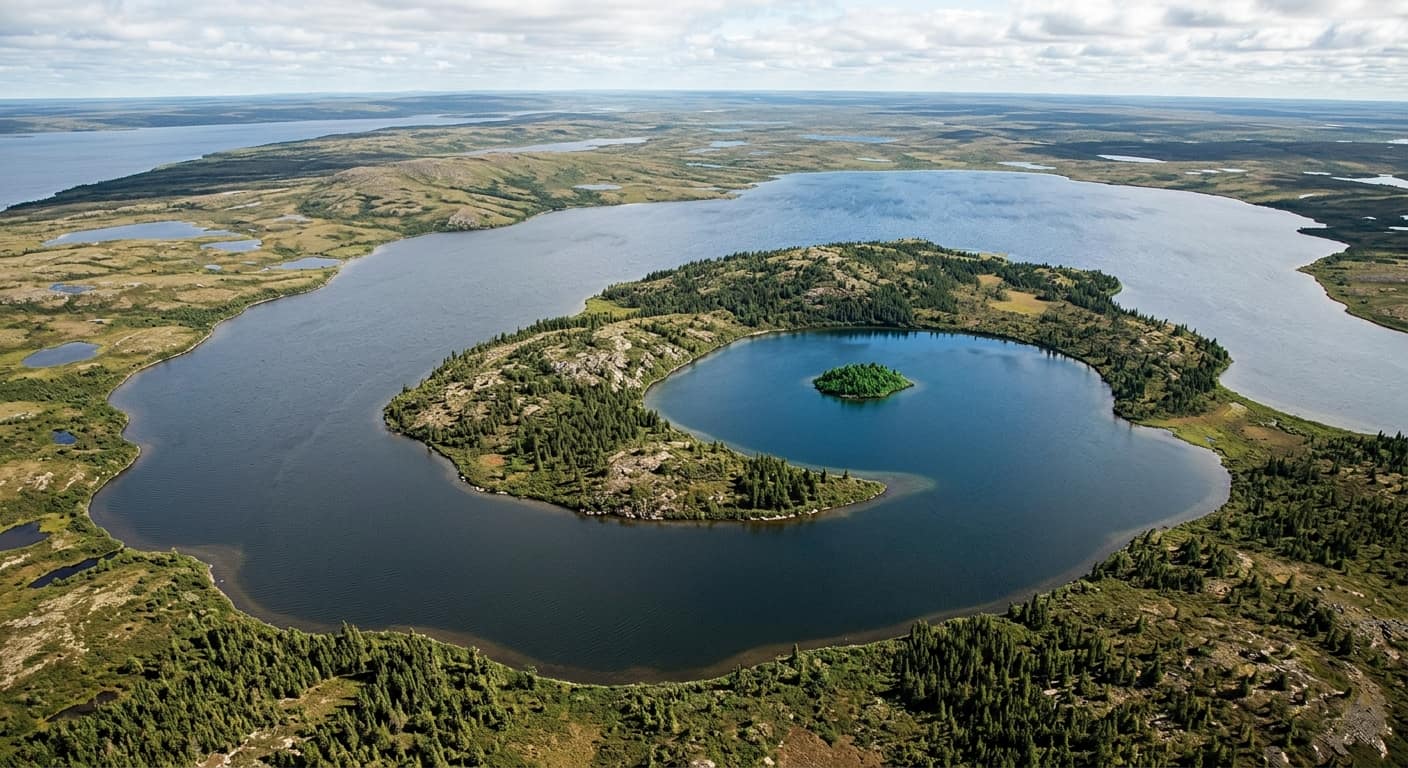
Quick answer: A visual geography puzzle about nested islands and lakes, the kind of map fact built for sharing.
The image is strange enough to stop the scroll. The real story is more useful than the quick caption.
Here is what the picture shows, why it travels, and what to check before sharing it.
Why people clicked
People responded because the story is instantly legible: one visual surprise, one simple claim, and enough curiosity to make people open the link.
But the click is only the start. A good nature story should answer the question the image creates without flattening the subject into a one-line claim.
What the story is about
This viral geography claim is built like a riddle: an island inside a lake, on an island, inside another lake, on another island.
The best-known version of this nested-island idea is tied to the Taal volcanic system in the Philippines, where Volcano Island sits in Taal Lake on Luzon. Older viral posts often pointed to tiny Vulcan Point inside a crater lake on Volcano Island.
The claim needs a caveat because volcanic landscapes change. Eruptions and lake conditions can alter what exists and what should be counted.
That uncertainty is part of why the topic keeps being discussed.
The article preserves the lead image image while giving people the geography context instead of leaving the old shared path as a 404.
Why this story matters
The World’s Largest Island Within a Lake on an Island Within a Lake on an Island spread because it is easy to understand at a glance, but the better reason to keep reading is what it reveals about nature, scale, and attention. A striking image can open the door; the useful part is learning what is known, what is uncertain, and why the subject deserves care.
Stories like this work best when wonder and accuracy stay together. The visual surprise should lead toward context, not away from it.
What to know before sharing
Viral nature posts often compress complex science into a single line. The safest way to share them is to keep the striking image, but add the names, places, and caveats that make the story useful rather than just surprising.