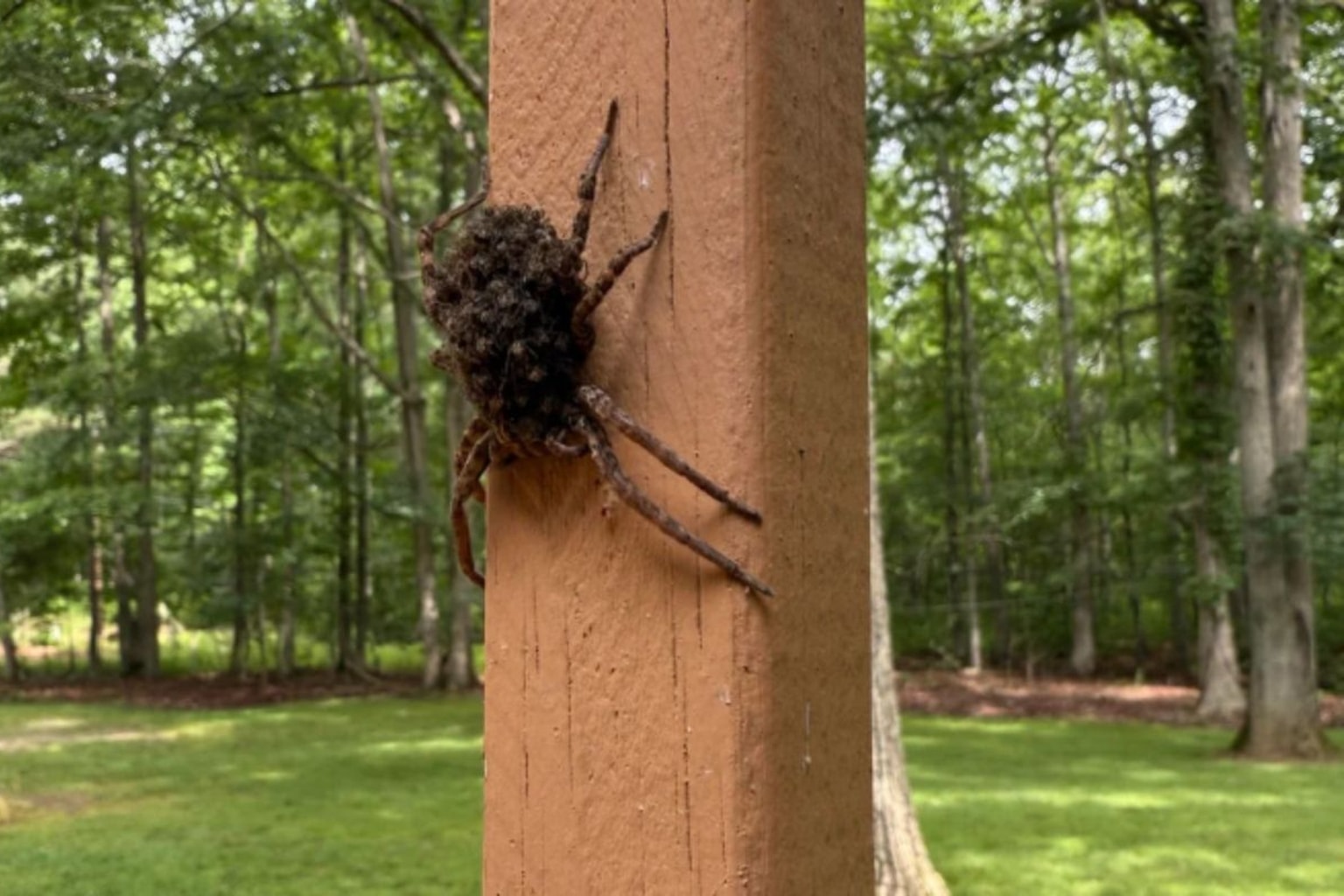
A backyard deck in Virginia recently became the stage for a startling, yet entirely natural, wildlife encounter. A local parent stumbled upon a large wolf spider carrying dozens of tiny babies on its back, prompting an immediate quest for answers.
The discovery, reported by The Cool Down, highlights a common reaction to suburban wildlife: a mix of fascination and fear. Still, as experts frequently note about these arachnids, “The only fear should be in the pest insects they will eat.”
This fascinating glimpse into backyard ecology is relevant for neighbors and friends who might otherwise instinctively reach for the bug spray at the first sight of a spider.
Why it matters
Encounters with large spiders consistently capture public attention, particularly when they involve visually striking behaviors like a mother carrying her young. Images and stories of wolf spiders covered in spiderlings frequently circulate on social media and community boards, driven by the intense, visceral reactions they provoke.
For many homeowners, the sudden appearance of a formidable-looking arachnid on a patio or deck triggers immediate alarm. The recent report taps directly into this seasonal surge of wildlife interactions.
As temperatures warm and insects become more active, predatory spiders naturally follow their food sources into human-adjacent spaces. The Virginia parent’s plea for answers mirrors the curiosity of countless residents who unexpectedly find themselves hosting these nomadic hunters, transforming a simple backyard sighting into a broader conversation about local ecosystems.
The catch
Beyond the initial shock of the encounter, people are fundamentally seeking reassurance about safety and looking to understand the ecological role of these creatures. Wolf spiders, belonging to the family Lycosidae, are unique among arachnids in their maternal care. Unlike most spiders that leave their egg sacs or spiderlings to fend for themselves, female wolf spiders attach their egg sacs to their spinnerets. Once the eggs hatch, the mother carries the dozens of spiderlings on her back until they are large enough to hunt independently.
People also want to know if these spiders pose a threat to their families or pets. The consensus among entomologists is that wolf spiders are generally harmless to humans.
While they can bite if trapped or severely provoked, their venom is not medically significant to people. Instead, they serve as highly effective, natural pest controllers.
Because they do not spin webs to catch prey, they actively patrol gardens and decks, hunting down nuisance insects. Understanding this shifts the narrative from treating them as a threat to recognizing them as beneficial neighbors.
What to verify
While the general behavior of wolf spiders is well-documented, specific details about this localized Virginia sighting remain points for further verification. Researchers and curious people might investigate the exact species of wolf spider involved, as there are over two hundred species present in North America alone.
Also, it would be useful to verify the specific types of pest insects this spider population is now controlling in the Virginia area. Local agricultural extension offices or university entomology departments often track these seasonal predator-prey dynamics, providing a clearer picture of the immediate environmental benefits these arachnids offer to suburban landscapes.
Source trail
A Virginia parent’s discovery of a wolf spider carrying her young serves as a powerful reminder of the beneficial predators living in our backyards. Rather than posing a danger, these fascinating arachnids provide essential, natural pest control, keeping populations of nuisance insects in check without the need for chemicals.
This backyard wildlife observation was originally highlighted by The Cool Down, a platform focusing on environmental and green technology news. For more comprehensive information on the biology and behavior of the Lycosidae family, further context appears in resources provided by the National Wildlife Federation or local university extension programs.