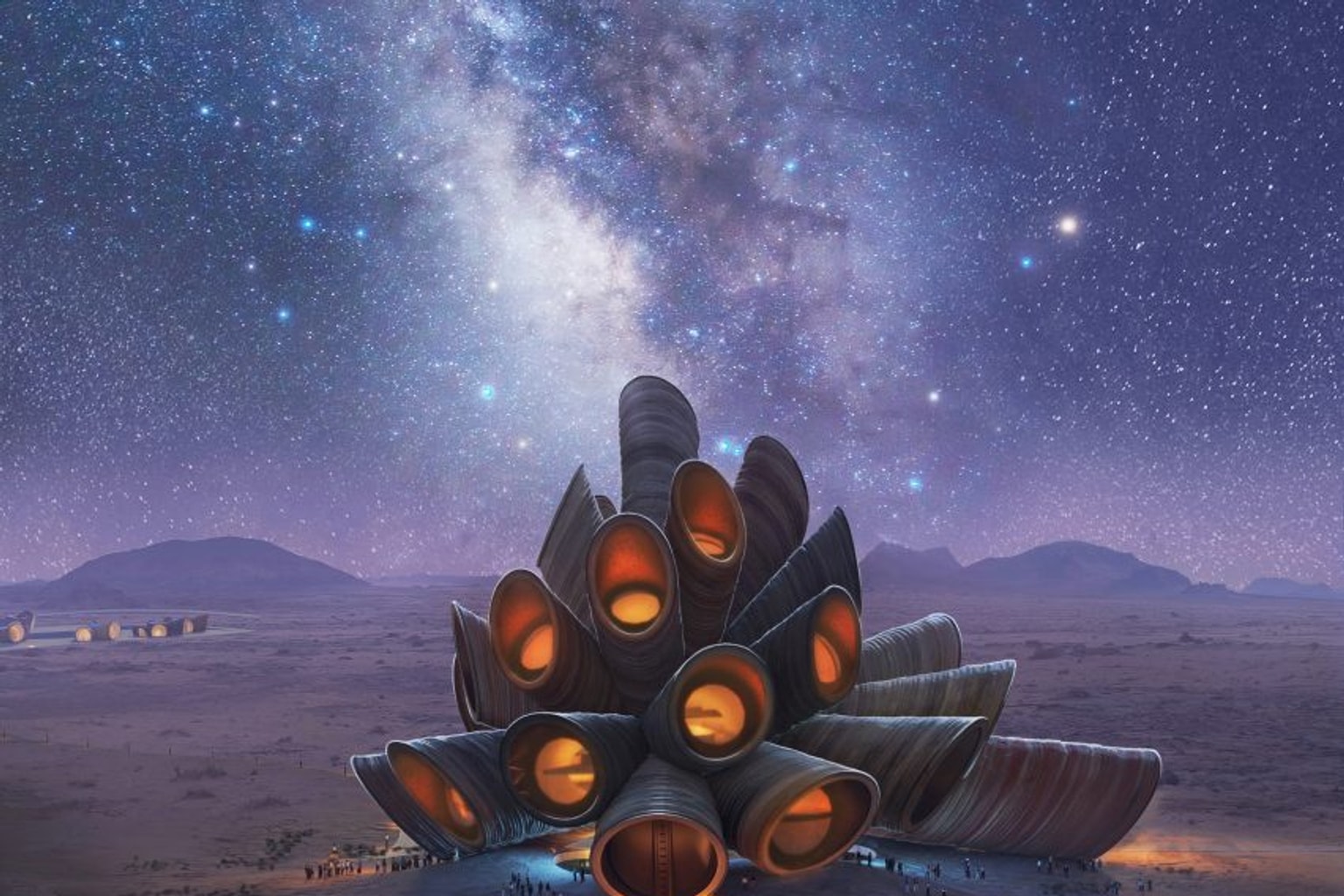
The intersection of cutting-edge architecture and ancient desert landscapes has yielded a striking new concept for stargazers and researchers alike. UK-based architectural practice Heatherwick Studio has officially unveiled its designs for AlUla Manara, a planned space observatory and visitor center.
Situated in the vast expanse of the Saudi Arabian desert, the facility is designed to sit in close proximity to the historic AlUla UNESCO World Heritage Site. For architecture enthusiasts and stargazers alike, this development is a fascinating glimpse into the future of astrotourism, making it a compelling story to share with anyone interested in how design can bridge the gap between ancient earthly heritage and the cosmos.
Why it matters
The architectural world is now buzzing following the design reveal published by Dezeen. According to the initial reports, Heatherwick Studio envisions AlUla Manara as a textured-stone structure that blends organically into its arid, rocky surroundings.
The facility is not merely a tourist attraction; it is slated to operate as a dual-purpose stargazing visitor destination and a dedicated research center.
This announcement is gaining traction because it highlights a growing trend in experiential and scientific architecture. By positioning the structure in the Saudi Arabian desert, the designers are intentionally capitalizing on the region’s exceptionally clear, dark skies.
The remote location minimizes light pollution, offering an ideal canvas for both casual astronomical observation and serious scientific inquiry. The release of these initial renderings provides the public with a first look at how the UK practice plans to integrate highly technical observatory requirements with an aesthetic that respects the local topography.
The catch
Beyond the striking visual appeal of a textured-stone monolith in the desert, the open question is the functional and cultural implications of AlUla Manara. People are curious about how modern architectural interventions can coexist with deeply historical landscapes. AlUla is globally recognized for its ancient tombs and dramatic sandstone formations. Introducing a state-of-the-art space observatory into this environment requires a delicate balance between forward-looking scientific ambition and strict heritage conservation.
Also, there is a keen interest in the mechanics of the building itself. Observers want to know how the textured-stone facade will perform in extreme desert temperatures and how the facility will manage its own light and energy footprints to maintain the pristine dark skies necessary for a functioning observatory.
The project signals a broader regional ambition to pivot toward cultural, scientific, and sustainable tourism, transforming a historically significant desert into a hub for global astronomical research.
What to verify
While the conceptual designs offer a compelling vision, several logistical and operational details remain to be confirmed as the project transitions from rendering to reality. Journalists and architectural critics will need to monitor the following aspects:
- The projected timeline for breaking ground and the anticipated completion date for the observatory.
- The specific scientific institutions or astronomical organizations that will partner with the research center.
- The environmental impact assessments, specifically detailing how construction and subsequent tourist foot traffic will be managed near a protected UNESCO World Heritage Site.
- The exact materials sourcing for the textured-stone construction and its thermal efficiency in the desert climate.
Source trail
Heatherwick Studio has introduced the design for AlUla Manara, a new textured-stone space observatory and research center located near the AlUla UNESCO World Heritage Site in Saudi Arabia. Built to harness the region’s optimal stargazing conditions, the project represents a significant merger of contemporary architectural design, astrotourism, and scientific exploration.
The primary details about the AlUla Manara design were originally reported by the architecture and design publication Dezeen. can read their full breakdown of the unveiling and view the initial concept images on their official project announcement page.
For more context on the historical significance of the surrounding region, the UNESCO World Heritage Centre provides extensive background on the archaeological importance of the AlUla area.
What to watch next
The useful follow-up is not only that Heatherwick Studio unveils “space observatory” in AlUla is circulating, but whether the next reports add verifiable detail: dates, locations, measurements, documents, expert review, or a primary record that the public can inspect. The source trail includes more Dezeen coverage while watching for primary-source updates. Until those details are public, the careful version is to treat the story as interesting evidence in motion rather than a finished conclusion.
That is also why the story is worth treating carefully. It gives the update a concrete object or event to follow, but it should travel with the limits still attached: what is known now, what remains provisional, and what would make the claim stronger when the next update arrives.