Why it matters
Recent scientific reporting has highlighted an extraordinary geological phenomenon: a massive seismic wave that traveled deep into the planet, bounced off Earth’s core, and may have physically displaced the landmass of Japan. According to a recent dispatch from ScienceAlert, the sheer force of this subterranean event left the planet “ringing Earth like a bell.”
This story is now capturing public attention because it bridges the gap between abstract planetary science and tangible, surface-level impacts. Typically, when we think of earthquakes, we imagine tectonic plates grinding against one another near the relatively thin crust.
Still, this event highlights the profound interconnectedness of Earth’s deepest layers with its surface environment. When a sufficiently powerful seismic event occurs, the released energy does not merely dissipate into the surrounding rock.
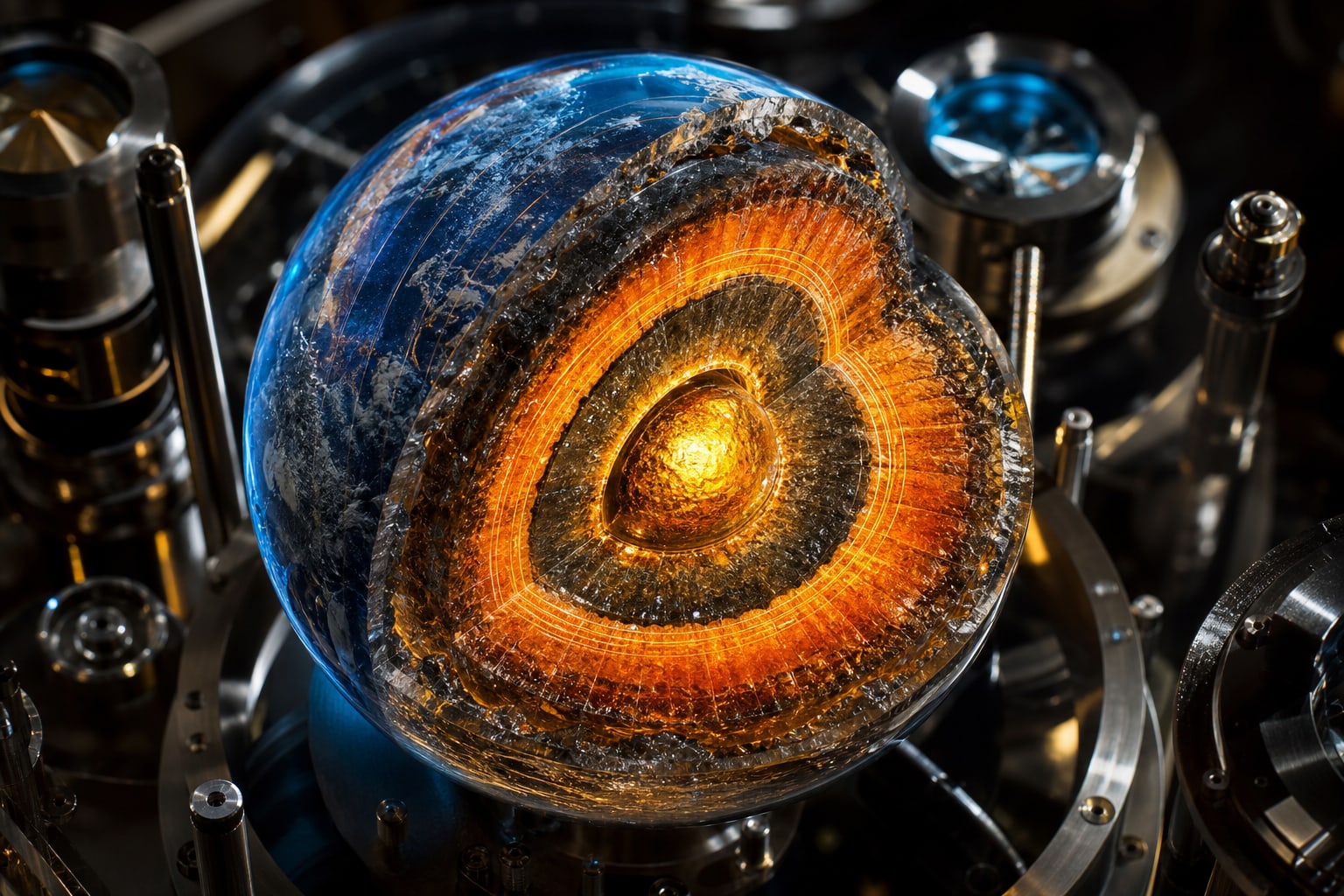
Instead, it radiates inward in the form of body waves, passing through the vast expanse of the mantle until it strikes the dense, metallic core. The reflection of this immense wave back toward the surface-specifically interacting with the core-mantle boundary before ascending-is a rare and powerful occurrence.
Seismologists are now analyzing this deep-earth echo to understand its potential role in shifting the Japanese archipelago.
The catch
The primary question for most people is how a subterranean echo from the center of the Earth could possibly possess enough kinetic energy to move an entire country. Japan is already situated in one of the most seismically active regions on the globe, perched dangerously along the Pacific Ring of Fire where multiple tectonic plates converge and subduct. The central question is whether this core-reflected wave acted as a primary, brute-force driver of the landmass shift, or if it instead served as a subtle trigger that released massive amounts of pre-existing tectonic tension along these volatile fault lines.
Also, the poetic concept of the Earth “ringing like a bell” requires some scientific demystification. In the field of seismology, this phrase generally refers to global free oscillations-a state where the entire planet vibrates at very specific, ultra-low frequencies following a massive shock.
Unlike a localized tremor that fades quickly, these global vibrations can travel back and forth through the Earth’s interior, resonating for days or even weeks. Understanding how these deep-earth mechanics influence surface geography is crucial for anticipating future seismic hazards.
For anyone fascinated by the hidden, dynamic forces shaping our planet from the inside out, this rare geological phenomenon offers a compelling reminder of Earth’s immense internal power and is highly useful for fellow science enthusiasts.
What to verify
Because the exact details of the wave’s origin and the precise measurements of Japan’s displacement remain under active scientific investigation, several critical data points must be verified before drawing definitive geological conclusions.
First, researchers will need to confirm the exact source, depth, and magnitude of the initial seismic rupture that generated the core-bound wave. Second, geophysicists must rely on global positioning system (GPS) arrays, satellite telemetry, and Interferometric Synthetic Aperture Radar (InSAR) to measure the exact distance and direction that the Japanese landmass may have shifted.
It is a known fact that major seismic events can permanently move coastlines by several meters, but attributing a specific surface shift directly to a core-reflected wave requires highly complex seismic modeling.
Also, the scientific community will be looking for peer-reviewed consensus on the wave’s exact trajectory. Verifying the specific phase of the seismic wave-and how its energy was preserved or altered as it interacted with the boundary between the liquid outer core and the solid inner mantle-will be essential for validating the claims surrounding this geological anomaly.
Source trail
A colossal seismic wave has reportedly reflected off the Earth’s core, sending powerful shockwaves back to the surface that may have caused a physical shift in Japan’s geographic position. Described by experts as making the planet ring like a bell, this extraordinary event underscores the incredible, deep-seated forces that continue to actively shape our world.
While the exact measurements of the landmass displacement are still being carefully studied, the phenomenon highlights the complex, three-dimensional nature of global seismology.
The initial report about this deep-earth seismic anomaly and its potential impact on the Japanese archipelago was published by ScienceAlert. For broader context on how seismic waves travel through the Earth’s interior, reflect off its core, and cause planetary resonance, further context appears in educational resources provided by the United States Geological Survey (USGS).