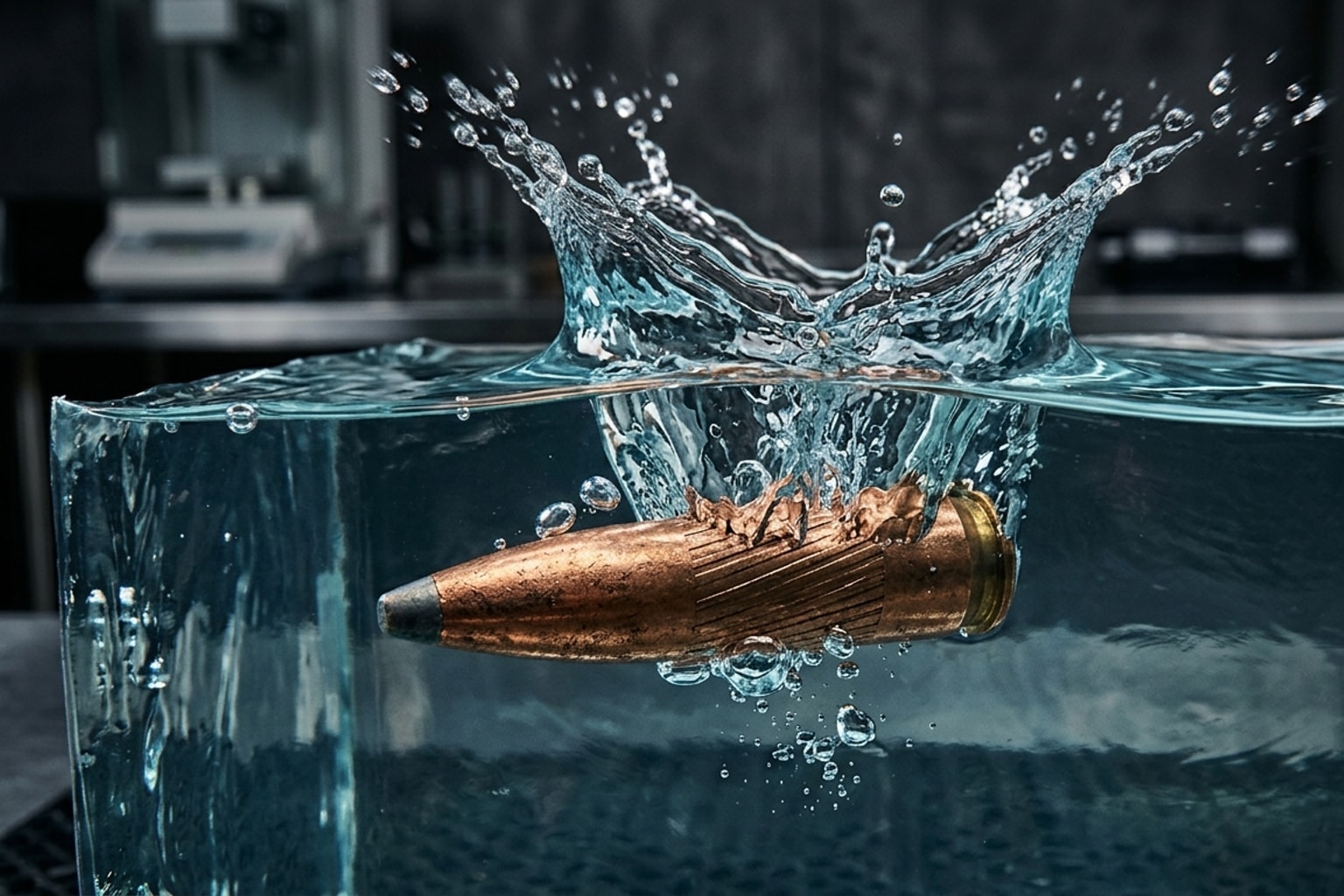
Automakers and weapons designers solve the exact same physics problem. A bullet cutting through water and a car driving down a highway both fight fluid resistance.
Engineers use identical aerodynamic tricks to manage drag and keep these objects moving efficiently.
Why it matters
Efficiency dictates modern transportation. Automakers face strict emissions rules and demand for longer electric vehicle ranges.
This pushes engineers to hunt for every possible aerodynamic advantage.
The same fluid dynamics that govern a bullet fired into a lake also dictate vehicle design. People share this connection because it links a dramatic visual—a bullet striking water—to the mundane reality of a daily commute.
Understanding this link helps explain why modern cars look the way they do. The teardrop curves and sloped roofs are not just stylistic choices.
They are strict mathematical solutions to a very old physical problem.
The catch
Physics treats both air and water as fluids. When a solid object pushes through any fluid, friction slows it down.
The front of the object splits the fluid apart. Still, the real aerodynamic problem happens at the back of the object.
The fluid must rush back together to fill the empty space left behind. If the object has a flat back, the fluid becomes chaotic and swirling.
This chaos creates a low-pressure zone called a wake. A large wake acts like a vacuum.
It physically sucks the moving object backward.
A bullet uses a tapered tail to let the fluid close smoothly. This specific shape minimizes the wake and maintains forward momentum.
Car designers use very similar shapes. The absolute ideal aerodynamic shape for moving through a fluid is a falling teardrop.
Cars cannot be perfect teardrops. They need space for passengers, engines, and cargo.
Instead, automotive engineers use sloped roofs and sharp rear edges. These design elements trick the air into flowing smoothly off the back of the car.
Some vehicles use a design called a Kammback. This chops off the tail of the teardrop shape abruptly.
The sudden drop-off creates a phantom tail out of air. This prevents the massive, drag-inducing wake from forming behind the bumper.
Whether it is a bullet in a test tank or a sedan on the interstate, the goal remains identical. The object must slip through the fluid without leaving a messy hole behind it.
What to verify
Engineers constantly test new ways to cheat fluid dynamics. Automotive design will continue to evolve as efficiency demands increase.
Watch how electric vehicle manufacturers adjust their rear profiles. Battery range relies heavily on reducing aerodynamic drag at highway speeds.
Check the official drag coefficients of new car models. Compare these numbers to older, boxier generations of the same vehicles.
Look for active aerodynamic parts on consumer cars. Moving spoilers and closing grilles change the shape of the car while it moves.
Investigate how different bullet calibers handle water impacts. Compare these underwater ballistics to standard air travel trajectories.
Source trail
The core comparison between ballistics and automotive aerodynamics comes from a recent report by SlashGear.
For more detailed information on how fluids behave around moving objects, the NASA aerodynamics guide breaks down drag, pressure, and wake mechanics.
Moving through air and moving through water require the exact same physics. Bullets and cars both need specific shapes that let fluid close smoothly behind them.
Managing the invisible wake at the rear of an object remains the ultimate secret to moving faster.