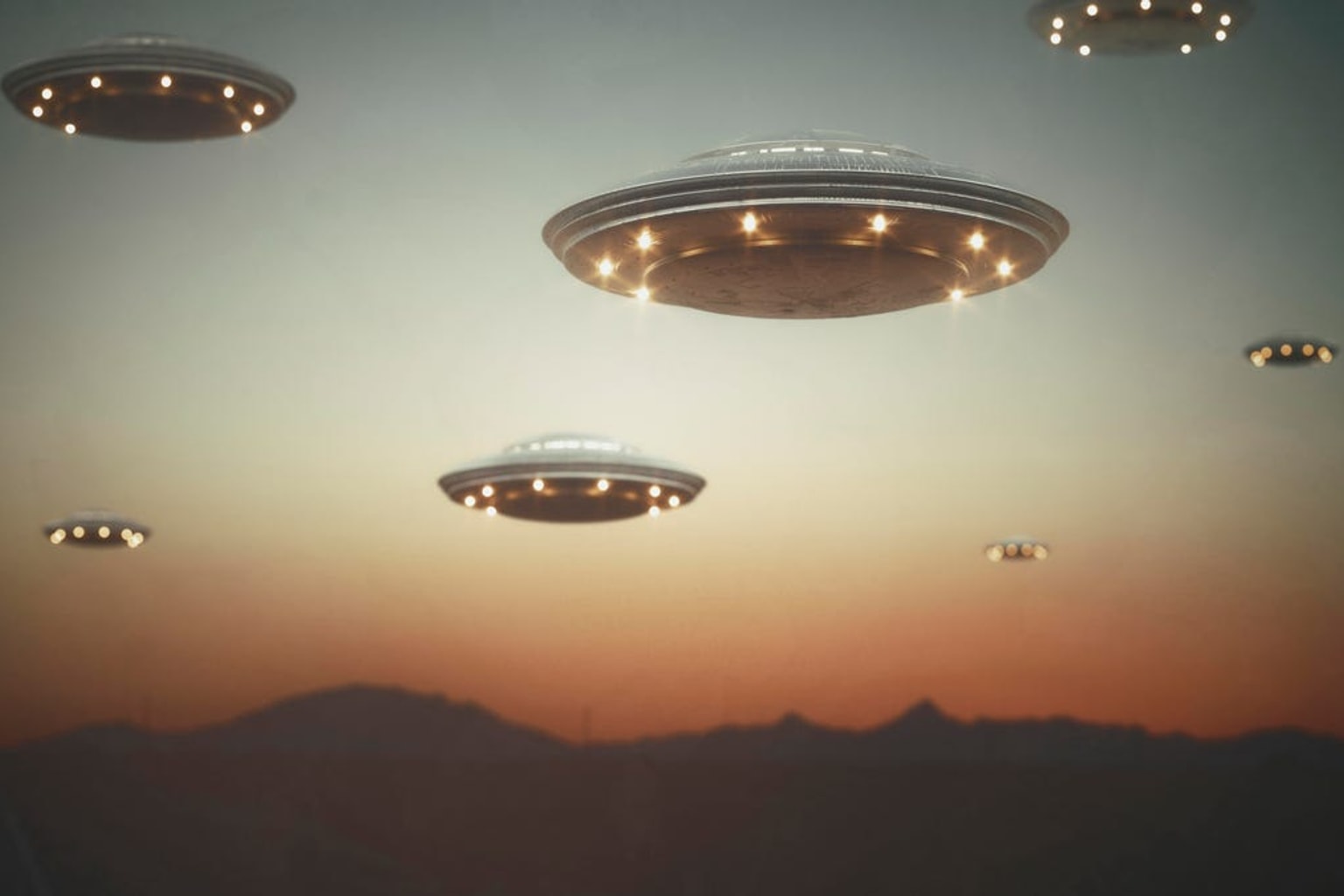
The intersection of Hollywood spectacle and actual government transparency has created a unique cultural moment. As Steven Spielberg’s latest blockbuster arrives in theaters, public attention is once again turning toward the skies.
Still, this time, the cinematic narrative is running parallel to real-world government disclosures about the investigation of unidentified phenomena. This story is essential to share because it bridges our cultural fascination with the unknown and the very real scientific frameworks we will need to evaluate future government disclosures.
It challenges us to ask not just what is out there, but how we would scientifically verify it if definitive proof ever arrived.
Why it matters
The current surge in public interest is being driven by a potent mix of entertainment and institutional transparency. According to recent tech and culture reporting, the release of Spielberg’s highly anticipated blockbuster happens to coincide with ongoing, real-world disclosures from government bodies about unidentified anomalous phenomena (UAPs).
For decades, the topic of UFOs was relegated to the fringes of conspiracy theories and science fiction. Today, it occupies a space in official congressional hearings and Pentagon reports.
This convergence has sparked discussions about a hypothetical “Disclosure Day”—a moment when definitive proof of extraterrestrial intelligence might be revealed to the public. The cultural footprint of a major filmmaker tackling the subject naturally amplifies the visibility of actual government programs tasked with investigating these aerial mysteries.
Consequently, audiences leaving the movie theater are immediately turning to news outlets and scientific agencies to see how close reality is mirroring fiction.
The catch
Beyond the thrill of a summer movie, people are grappling with a profound epistemological question: if undeniable evidence of non-human intelligence were discovered, how could the public trust it? In an era characterized by advanced artificial intelligence, sophisticated digital manipulation, and a baseline skepticism toward institutional authority, photographic or video evidence is no longer sufficient to sway the masses.
the open question is the threshold for definitive proof. They are looking into how scientists, astrophysicists, and government officials would collaborate to verify anomalous materials or sensor data.
Also, people want to clearly separate the sensationalism of Hollywood from the dry, rigorous reality of scientific analysis. It is crucial to note the primary caveat emphasized by experts and reporters alike: despite the increased government transparency and the tracking of unidentified objects, there is now no proof of alien life.
Unidentified simply means unidentified, and bridging the gap between an unexplained sensor reading and confirmed extraterrestrial contact requires an extraordinary burden of proof.
What to verify
As the conversation continues to evolve, several key areas require careful monitoring and verification by both the public and the scientific community:
- Official Agency Reports: Keep an eye on publications and data releases from official government entities, such as the Department of Defense’s All-domain Anomaly Resolution Office (AARO), which is tasked with formally investigating UAPs.
- Scientific Consensus: Any extraordinary claims regarding UAPs must be subjected to peer-reviewed scientific scrutiny. Verify whether independent academic institutions are granted access to the government’s sensor data and physical materials.
- Distinguishing Terminology: It is essential to continuously verify the language used in future disclosures. Observers must ensure that the term “unidentified” is not prematurely conflated with “extraterrestrial.”
- Technological Artifacts: If physical evidence is ever claimed to be recovered, the metallurgical and isotopic analysis will need to be verified by international scientific bodies, independent of any single government’s jurisdiction.
Source trail
The release of a new Steven Spielberg film has perfectly captured the zeitgeist of modern UFO discourse, blending our love for cinematic wonder with the serious reality of government UAP investigations. While the idea of a “Disclosure Day” is captivating, the real challenge lies in our collective ability to establish a trustworthy, scientifically rigorous framework for evaluating evidence.
Until then, the skies remain full of mysteries, but devoid of confirmed alien visitors.
This phenomenon was highlighted in a recent analysis about the intersection of pop culture and government transparency. For more context on the challenges of verifying unidentified phenomena in the modern media landscape, can read the original report on CNET News.
Also, people interested in the official mechanisms for UAP reporting can look into the public frameworks established by the Department of Defense.
What to watch next
The useful follow-up is not only that If ‘Disclosure Day’ Comes, How Can We Trust Evidence of UFOs? is circulating, but whether the next reports add verifiable detail: dates, locations, measurements, documents, expert review, or a primary record that the public can inspect. The source trail includes more CNET News coverage while watching for primary-source updates. Until those details are public, the careful version is to treat the story as interesting evidence in motion rather than a finished conclusion.
That is also why the story is worth treating carefully. It gives the update a concrete object or event to follow, but it should travel with the limits still attached: what is known now, what remains provisional, and what would make the claim stronger when the next update arrives.